Nichalas Barnes
Software engineer and composer.
I build product features, API integrations, and workflow automation.
Scroll to travel
Composer first, then engineer.
Nichalas Barnes is a software engineer and composer. He spent the first decade of his career as a composer, bandleader, and audio technician, leading the ten-piece ensemble Alex's Hand on international tours across the US and Europe, before moving into software engineering. He has lived in Seattle, Berlin, and Madrid.
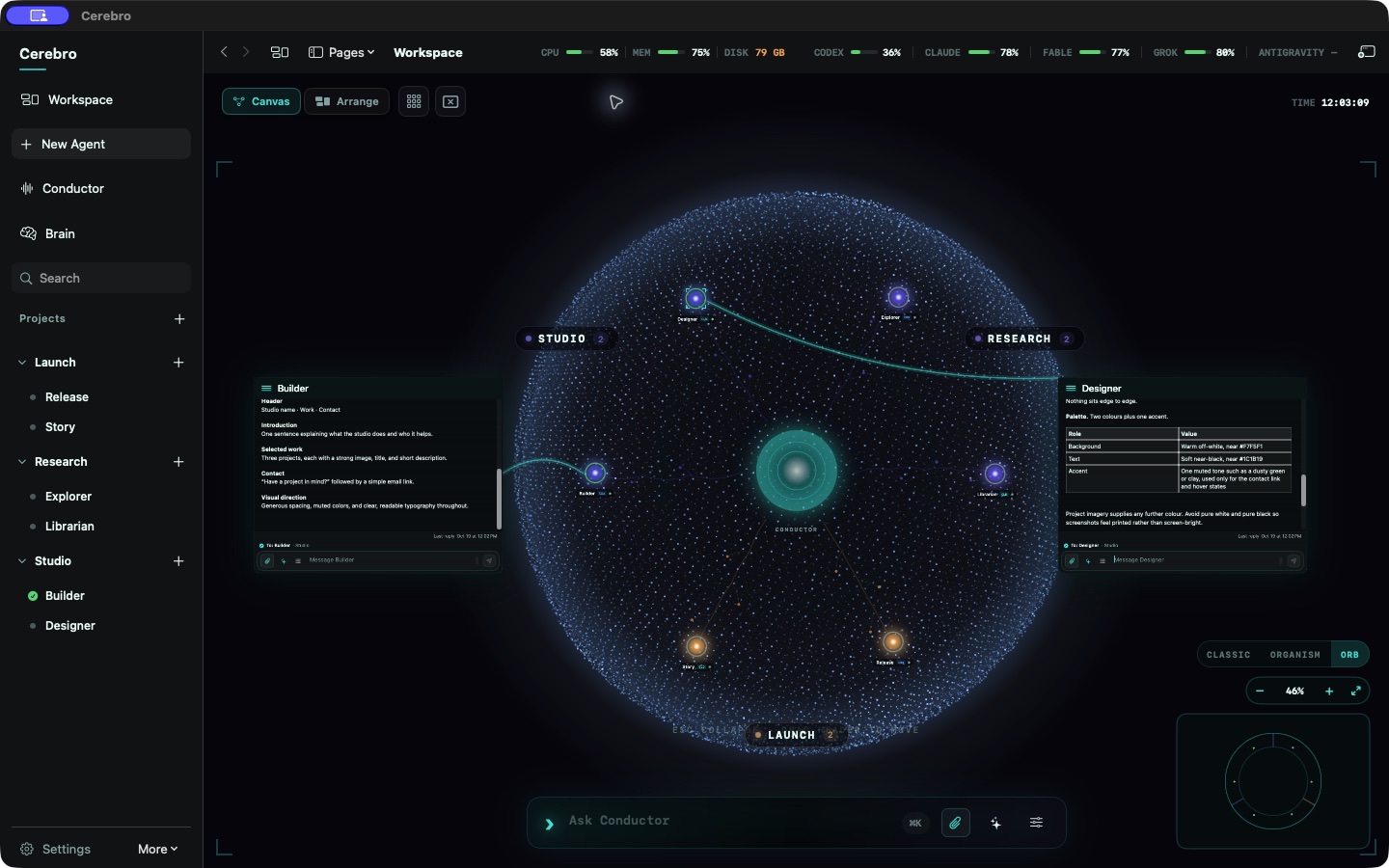
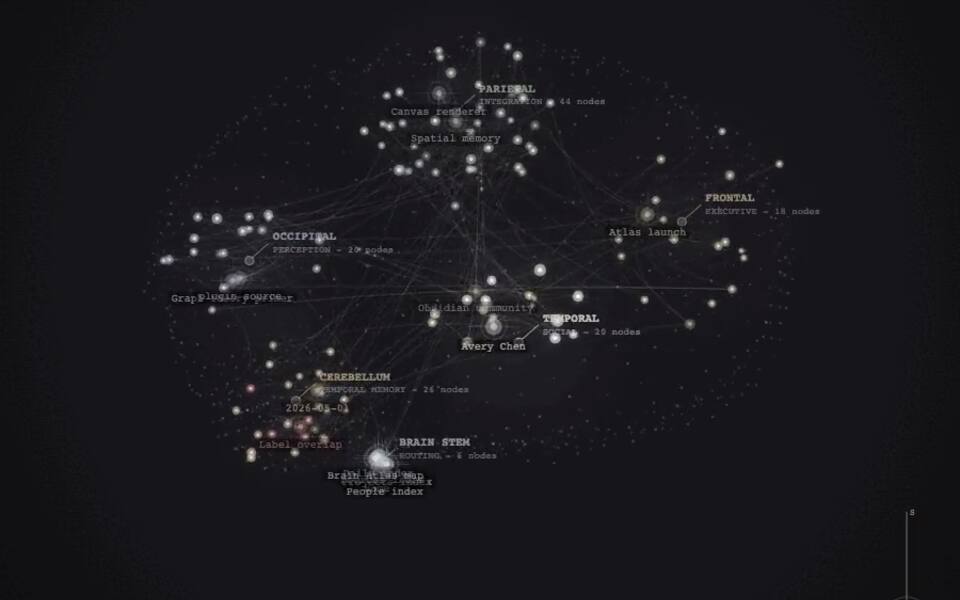
He builds Obsidian plugins, web applications, browser games, developer tools, and AI agent systems. Recent work includes Cerebro (a macOS workspace for AI coding agents), Brain Atlas (an Obsidian plugin), and El Form (a typed form library).
- Lived inSeattle, Berlin, Madrid
- BuildsObsidian plugins, web applications, browser games, developer tools, AI agent systems
- AlsoComposer and bandleader, Alex's Hand
Software you can explore.
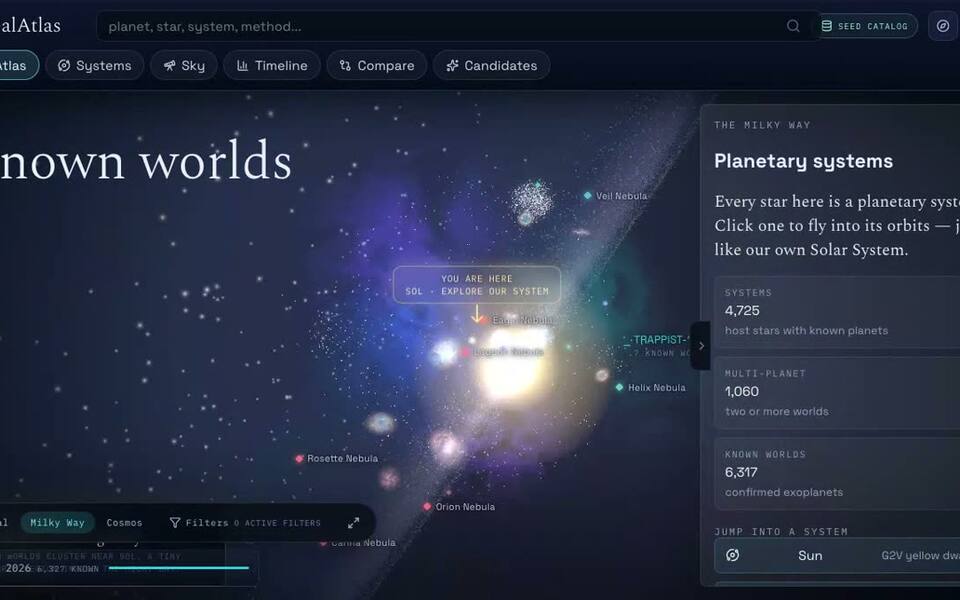
GalAtlas
Web appA cinematic 3D atlas of exoplanets and the cosmos: fly from a single rocky world out to its planetary system, the Milky Way, and the cosmic web beyond, with real catalog data, discovery timelines, and habitability readouts over a full-bleed WebGL stage.
- React
- TypeScript
- Three.js
- Vite
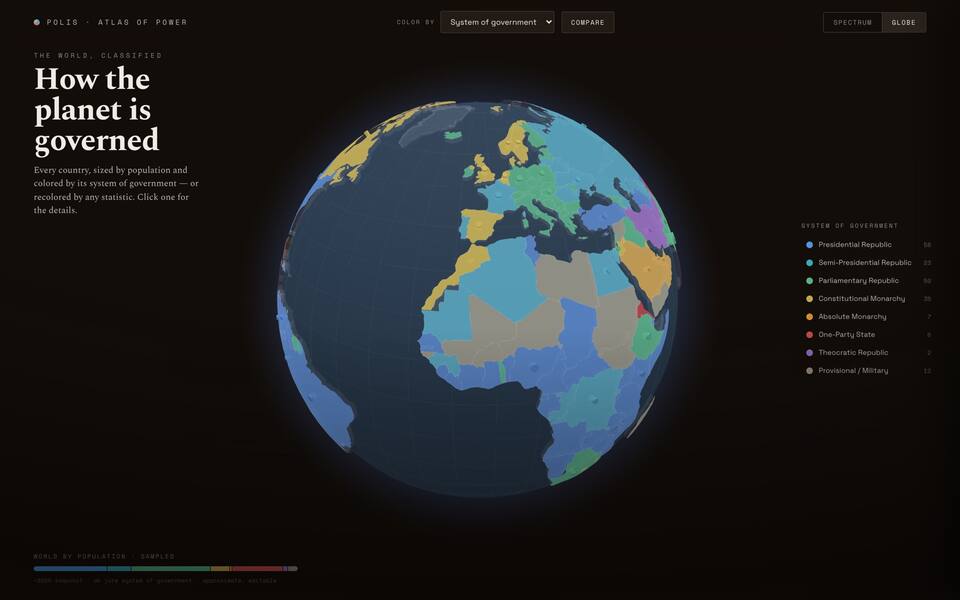
Polis Atlas
Web appAn interactive atlas of political power: a spectrum that maps 50 ideologies from total state to no state, plus a 3D globe classifying every country by its system of government with 18 real-world statistics layered on top.
- React
- TypeScript
- Three.js
- Vite

Job Toast
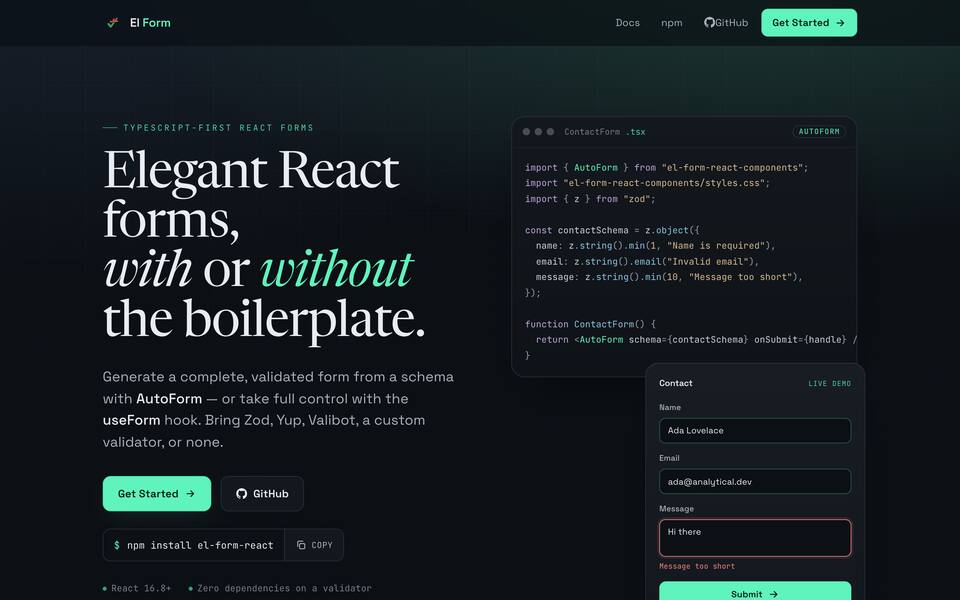
Web appA shared home for the moving parts of a job search: saved roles, application stages, notes and contacts in one workspace, with a browser extension for saving jobs and AI-assisted cover letter drafts.
- React
- TypeScript
1 of 7sideways scroll or arrow keys
Tools, games and experiments.
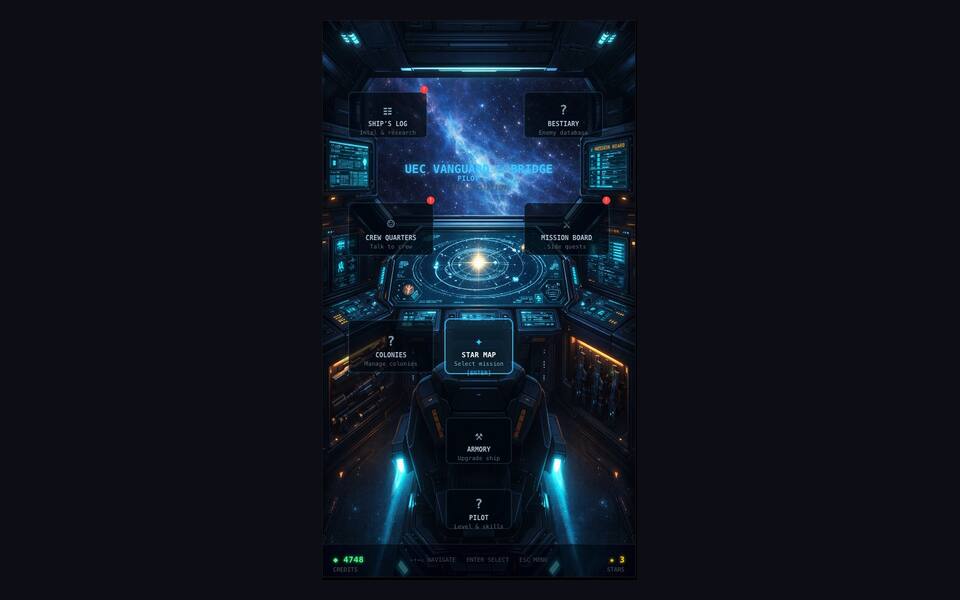 Sector ZeroWeb game
Procedural space survival with drop-in co-op.
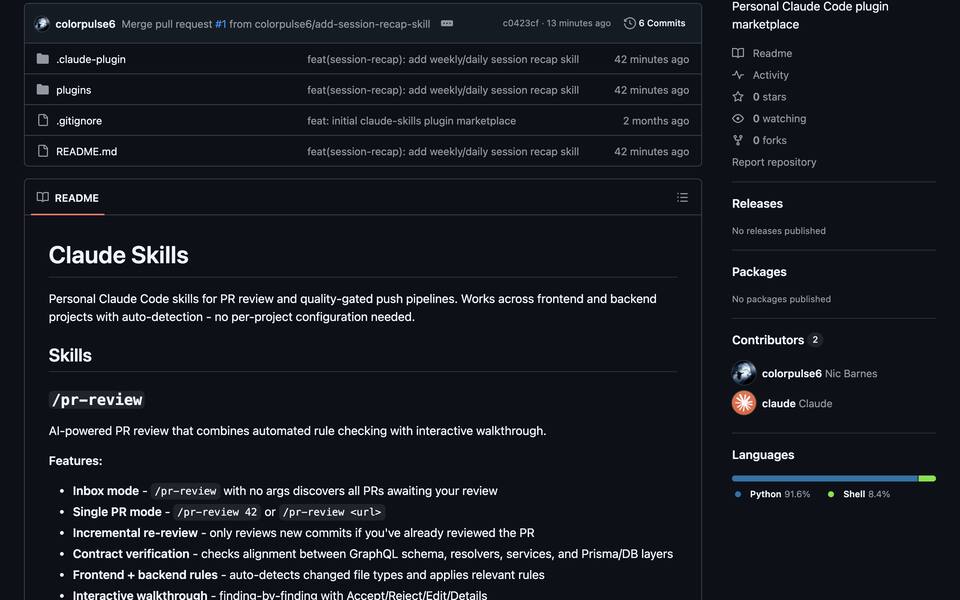 Claude SkillsClaude Code
A personal marketplace of skills for the PR workflow.
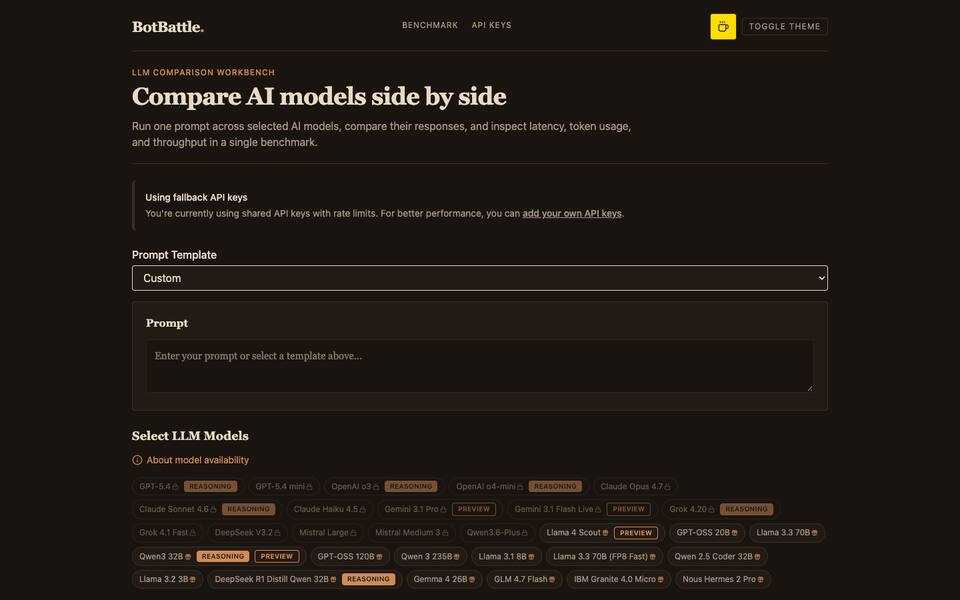 Bot BattleWeb app
LLM API testing metrics.
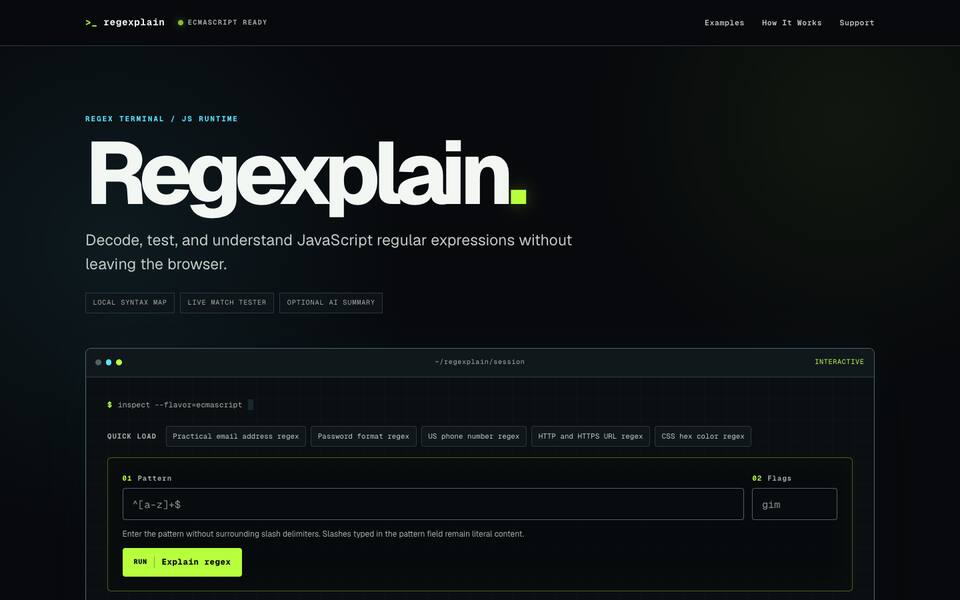 RegexplainWeb app
Explain your regex in a way that is easy to understand.
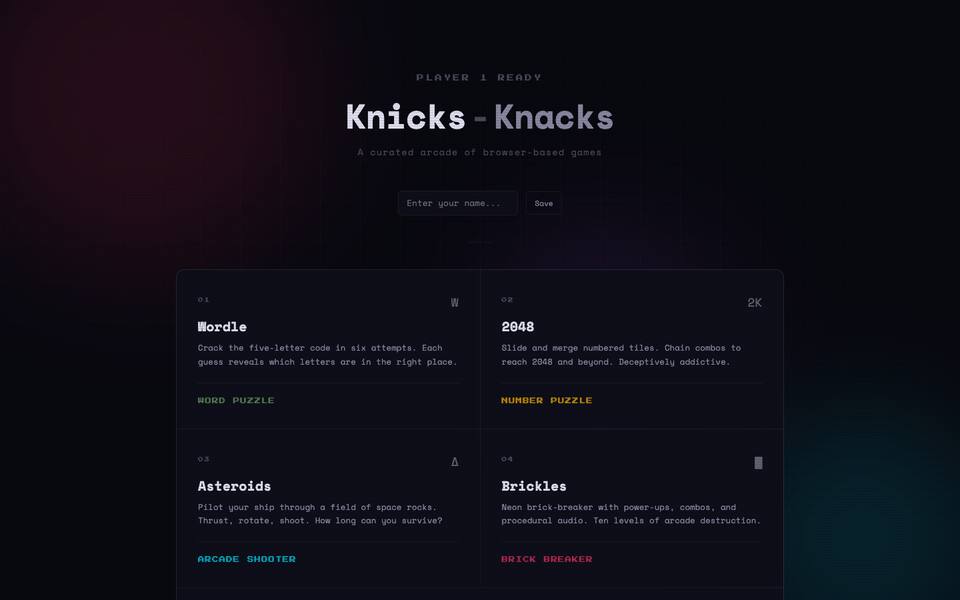 Knicks KnacksWeb games
A browser arcade with profiles and stat tracking.
Ideas worth sitting with.
Essay · Medium · 30 March 2026
Agile Anarchy: What’s Left?
There is a lot of talk about engineers and designers being replaced by AI. Everyone can feel the ground moving, in fact its practically breaking apart under our feet, but very few are willing to follow that logic all the way to its absolute conclusion.
Read on Medium
Essay · Medium · 9 June 2025
Codex & the Human Coder: Why AI Needs Our Wisdom (And Our IDE(A)s)
This article offers a more optimistic take: Codex and its kin are transformative assistants, not replacements. They are the next logical step in the long history of programming abstraction.
Read on MediumStories and songs.
Stories
Fiction
A Room With A View
Not only is the floor hard but its covered in wires. The empty cigarette packs make a nice cushion if they're in the right position. Theres a vent high above me that almost touches the cement ceiling but stops short. I like to look at it like it's some bond villain; more powerful than the wall but not quite as collected and austere as the ceiling. Like it's waiting at the bus terminal with a bomb. Waiting for a certain bus with a certain passenger but is to distracted by it's own motive and doesn't read the right sign and ends up missing the bus because he isn't sure which passenger is on which bus. Always he misses the bus. Will always miss the bus. Theres no two ways about it.
There are pipes. One is in a perpendicular erection to the wall but straight forward like the penis had a muzzled dog nose. Another pipe behind it, thicker and spray painted for some reason, was burrowed into a drywall box in one corner on one end and painted the same color as the drywall box in the opposite corner. This is weird to me. Fucking weird. Like an ironic mistake. It occurs to me that I have to think about these things if I ever want to fall asleep. Especially in this place. Unless I am comfortable, my mind will devour me and I will eat reality like I'm starving and it's a delicious hamburger, until the daydream becomes a nightmare and I become comfortable because I have picked certain things out to help occupy my brain with meaningless information. It has to be this way. Things have to bear absolutely no importance on my waking life, it has to be random, arbitrary, stupid…otherwise my mind will eat it up and I cannot handle the digestion because my metabolism is too quick. And insatiable, never filled, always hungry. Like there is a tunnel inside of the mind and at the end is a slight glimmer of something you can barely touch and despite how much you want it and how obsessed you become with it, it just becomes a part of your dream or twisted nightmare. And then you fall asleep.
I have been in this room for an indeterminable amount of time. Its part of an experiment, I have agreed to. I cannot leave, it is part of the experiment, and if I do, everything will fall apart somehow and I will loose what I have been trying to obtain and in one fell swoop become exposed again to the fucked up world outside and my mind, the frailest of organs, will once again become diluted by society. It will give me information that I do not need or want and it will reduce me proper. Like vermiculite to soil, like sand, like the croppings of beetle wings, sawdust and basil that, in some mad scientist's version of an antidote to some disease I do not have, is somehow connected to the panacea that I need but can never bring myself to ask for.
I have a friend that comes by and brings me things. Survival elements; Food, beer and cigarettes mostly. The later two without question, the former can momentarily be substituted by meditation and further drinking. The food is usually dim sum. I didn't ask for it but I don't really care. I'll eat shoelaces when Im drunk and the MSG makes me feel like i'm sparkles and helps me sleep so I go with it. Sometimes he brings me trinkets which I usually throw into a corner somewhere but then rearrange them quickly if I know he's coming to establish a perception that maybe I am ministering these stupid items as if they mean something to me. Maybe they should. I just don't seem to care. My friend's name is Fred.
Sometimes Fred comes by, and for reasons I can only explain to myself, I can tell he is afraid. Maybe it's the awkward look on his face and the darting glances that shoot out like an estranged chrysalis atop an asparagus high on lightning and forcing itself into every conceived corner of non-space, but it frightens me back actually, seeing a human being so offensively perturbed by another. Or maybe its not me he is afraid of and if its not then that scares me even more. I guess it's a sort of symbiosis that we have. A collaboration in fear.
I hate to say it, perhaps because I rely on him so much and have known him for so long but, sometimes I sense something almost sinister in Fred. A betrayal; but not from him in particular. He is a good person, I can sense it. I wouldn't have begun this whole thing if he weren't. But I feel as if he is some kind of a henchman, perhaps even for this whole situation, this weird experiment that we have agreed to. In the beginning it was more jovial, I had it under control, or at least I thought I did and that was good enough to keep me happy or whatever. But at this juncture I am no longer sure who is in control of what or if there is any control to be had at all. Sometimes its like I have become not mine or Fred's but some other force's twisted experiment. Like I am a prisoner. I think I have to imagine these scenarios because I have no contact with the outside world. In this scenario I have created I can imagine him driving away from this room in silence as some dark overlord pats him on the back, appearing out of nowhere in the backseat and congratulating him on a job well done. He resists the accolades because he hates what he has do to but has no say in the matter regardless. At least this is what I see in his eyes as he hands me the half rack and bags of dim sum and seems to be begging me to be the one to stop all this. He handles it all like he's fucking poisoning it and I look at him. I try to tell him that I've poisoned myself and that he has nothing to do with it, but my eyes are not so revealing, forgiving.
Yesterday, I think it must have been, I wrote a a small bit about altruism on the wall next to a strange hole that only goes as deep as my longest finger will allow. I think I love this hole. I don't understand it, and it makes as little sense to me as a monkey on a tugboat, but I don't seem to want to know why or how this hole is here either. I just want to love it as it is. It is a beautiful thing when you can choose not to care about what you love because you know it just is and will always be what you think you love. But I wrote this thing on the wall and I was thinking that it doesn't matter if you do nice things at all. Assholes do nice things all the time. I think you have to be afraid to be an asshole. Fear is the overlooked cousin of empathy but balancing fear and empathy is too difficult for most of us to imagine. Fear makes you sensitive and through the introspection that is created through your own knowledge of it you become empathetic. False confidence does not breed sensitivity, that much I am sure of. The gift shop is what we cant help but expose to the rest of the world. The gallery is what we have inside that people are constantly trying to figure out. I used to think that I was a nice person until I realized that having these kind of thoughts make me an asshole.
Anyways, I have to let myself breath sometime and sometimes I miss people because, despite all their annoying faults and beautiful problems, they are at least interesting. I miss being downtown and looking at some random guy 's head lesion after I establish eye contact and then they look away right before I do. I miss catching a fearful glance from someone dressed in a halloween costume that is slightly more outgoing than their comfort can allow. I miss sitting awkwardly in a stairwell with a cigarette, watching the people go up and down wondering if it's normal or not. I miss the mystery of whether or not things are normal because right now I have no idea. I guess I need that self proclaimed vindication. I need some kind of reference point, I need something to see so that I can at least see through it. In this room I cannot bring myself to see anything let alone see through anything. The only faults I can identify are my own and they have no reference. I guess the only thing you can actually see through is yourself and once you pass through that and into the other room all there is are one way mirrors.
I miss little interactions with people that don't matter. People that don't matter say the most interesting things because they don't care and they don't care because no one has ever cared about them. Their thoughts are only their own. I miss the homeless superheroes, riding that electric rainbow into foreverness. I miss talking about things that I don"t give a shit about just for my own therapy. I miss calculating the time it takes for grocery clerks to bag your groceries. Some of them are really good, but i'll never tell them. I guess I just miss slipping on the slime that coats the city. It has a strange cushion when you fall. It's like a lillypad, you might fall in but you can't expect anything. In this room I have my shoes in a small duffle bag in the corner and all I use are flip-flops.
What I don't miss is the planing and strategy that comes along with interacting with society, contorting my face and personality to match an assumed perception of some female, hobgoblin or whatnot that I see on the bus, looking off with squinted eyes and lips pursed like an asshole. Im definitely an asshole, at this point i've relaxed to this fact. I don't really miss sex all that much. At least not as much as I miss talking to women and kissing their faces. I masturbate about once every 4 hours but I don't have a clock in here. There's also that thing that happens when your talking to people and you weigh their personality and react to them accordingly. People will tell you they don't do this but they all definitely do, its just that some people are not very self aware or too much so, at this point i cant really tell. I do miss friendship. And I miss being a brother.
I can tell my friend is here again because I can hear the estranged echo of footsteps and the rustling of plastic bags and him typing in the code onto the keypad on the door. You have to press the buttons in very firmly otherwise it takes forever and it's no longer a secret. I have given him the privilege of coming in unannounced because I feel it gives me a very small amount of spontaneity that i think is important. I hear him keying in the code and my brain has to immediately shift from private to social in 3-5 seconds. I think that humans need this shift to survive. When you pull them out into the world it is overwhelming. They are in a constant state of trying to understand the private recesses of their mind's while spontaneously interacting with others in the process. Thats why society is schizophrenic. Why do children learn to talk? Because everyone else is doing it, and so I have arranged for the lowest possible amount of this. Learn to react immediately.
I have one bucket in the corner in which I pee and shit the massive amounts of MSG I consume. I cover it with seran wrap. It may not be the best system but I'm too lazy to think of anything else. I'm not Alan fucking Turing. I've told Fred not to give me any advice and to overlook any discrepancy that he may see in my behavior while i'm in here. I have directed him to abandon any formula for this scenario that he may construct and I tell him to shut up and I am still learning to do the same: Any mistakes I may make in this eternity are my own to live with and thats the way I've decided it should go.
Sometimes I want to talk to Fred about the world. This is not one of those times but sometimes I do. I occasionally want to engage with him about the ticks and tocks of life out there. But I have expressed very clearly that he is not to speak to me about anything other than what may be happening in this room. There's something about this that I don't think he likes.
The list of items I have in this room are as follows: a tiny glockenspiel that I hammer out rhythms with, a recording interface, two microphones, two speakers, a children sized drum set, 37 books of empty college ruled paper piled up in the corner and 3 scattered about the room with diametric scribblings and esoteric remarks on random pages about divinity, 20 30 paged books of staff paper untouched, a USB keyboard, a Bob Hope marionette I bought from a Ukrainian gypsy on 4th ave in Olympia, 3 firewire cables, 7 xlr cables, a pair of colorful boots, an amplifier and 3 foot switches.
I have acquired the habit of marking, with a ball point pen, all of the spots where I bruised, cut or hurt myself. For example, I fell onto a cymbal stand the other day and now my shoulder is in considerable pain. I think i'll keep re-marking it until it goes away. At least I can reach it. At least I can diagnose the problem. I feel as if this calculated procedure will help in identifying things about myself that would otherwise go unnoticed. At least the parts of myself that I can reach. If I am not becoming a robot, than I am coming close to being one. As if thought were just an amalgam of circumstance. My environment is finite, like a local bar where you are a regular. You keep thinking you are going to experience something different with each day, but nothing ever changes. You go in, expecting to find that one thing that tells you that you are alive and not just a machine, but it never comes. You are the same person you were yesterday, and the day before, and you can never expect anything different. You can never expect life to be something that it isn't because then it never will. You will always be seeing past life instead of through it. Your frustration of what is not happening will shadow reality and make you a non-entity, a husk of what was once a human. But then you wake up for some reason in the middle of the night and go outside, because this is where you think life happens.
Fiction
Jeff's Weird Fantasy
Jeffrey is the most powerful being in the universe. He had his qualms with it though. For example, he couldn't stand being the outcast of a situation. The foreigner. The Social Interaction was his god and he prayed to it just a little bit more than the rest of us. Its not as if he had to be at the center of anything, no, he didn't like that either, made him feel weird, on the spot, like he was being admired as is a shinny diamond or a sunset, something that had no foundation other than what was imagined; unreachable, untouchable, just a catalyst for someone else's perceived version of beauty, contorted, disturbed, diluted. If not anything else, he at least wanted to communicate this with people. Was sad when he wasn't able to. Made him feel limp, lost, a decrepit goblin scouring the streets around the golden gates.
But like us all he was his own worst enemy. The guy could write his way out of a box made of one way mirrors, but never mustered up the apathy to do so. Jeffrey was so concerned with the stroke marks that he could never see the full painting. He cared too much about the little movements of things, the stuff, the shit that doesn't matter, the shit. He had it down to a science, a mathematics of movement that went on forever. The end is something you create, and if you don't then life will go on and on and you will miss everything. The importance of the details can only last for so long before you disintegrate into the surroundings, become just wallpaper with an interesting design on it, but its just wallpaper so no one gives a shit because it's the wallpaper of a really cool bar. And that would be fine for him even, but in his mind he would be the wallpaper that every talks about. It would be more like that shit on the walls that make people not want to go to the bar at all. That shit thats in the background for a reason, stuffed away from the point of focus like a withering flower on which there is maybe one petal left. A petal that is covered in shit and just trying to lay to rest but can't because reality wont let it. In his mind Jeff's bullshit would be more important to everyone else than anything good around it. It would be like a disaster, like a bombing; more influential than any art. And he would never realize that it's because of his gross, blackened and disgusting flower petal, covered in shit that anyone would ever experience anything at all.
Fiction
Jerks
At the same time, or slightly before you read this, on a small vessel just outside of the planet Earth's atmosphere, two rather bored looking individuals sat in silence flipping unmarked cards onto a table. The cards gradually piled up.
"I win," one of them said.
The other collected the cards, shuffled them, split the deck and started over.
"I win. Thats six. Im telling you, its all in the wrist."
The other shook his head as he gathered up the cards again. "For you maybe. But I'm on a whole other level. I'm working on a special technique," he said looking downward with a grimace-like expression, "a secret technique. Ancient. A technique of the mind."
"Well whatever, I've grown rather fond of the wrist technique. It seems to be effective for winning."
"Its not all about winning, Siggy."
"Actually thats all its about."
He flipped another card
"I win."
"Well maybe in the long run, but once I get this down, I'll be winning in my sleep."
"And how long does this technique take to develop?"
"Dunno, probably like another four thousand years. You just keep wristing about…you'll see."
"Well I don't have time for that." Flip. "I win. I quit."
"You can't quit. I can't master the technique unless you play. Just one more, I've almost got it."
"Nope." He got up and adjusted his jumpsuit as he floated away. "I'm done," he said, "have fun," yawning so it sounded more like 'howl run'. He floated across the room and brought his ass down onto the rotating stool in front of the control console. Just beyond him was a window, on its glass surface was a vast diagram of the galaxy, the screen activated automatically as he sat and the Earth appeared. He moved his palm across the ball in the middle of the board and various index fields opened up. Lines of glyphs streamed along the fields and he selected a certain parameter of information that he needed. "Hey Salamander," he said.
"Not now I'm concentrating." He flipped another card.
"No seriously," Sigfried checked the text once again for verification and then turned around. Salamander, narrowed his eyes on the target and flipped again. The card went out of control, catching a maverick pocket of gravity and flew to the other end of the room.
"Shit," he said.
"Salamander you dull witted bastard. I've got the lock-in. Lets get dressed, its time to do this."
Salamander shot up from his seat, and immediately found himself in a deep, orgasmic black-out stretch that disabled him even as he drifted into the ceiling. "Yearrrhhh!" He announced upon his recovery. He positioned his feet on the ceiling and propelled himself in the direction of the door. "Its about damn time. Im startin' to get space-crazy." The door opened and he drifted through it.
"Yeah right." Sigfried palmed the ball and brought up the log. He typed something into the field, read it, deleted it and typed something else. He cleared the screen, leaving only the live video feed of the Earth before doing a backflip that sent him flying towards the door.
Sigfried drifted through the bright tunnel after Salamander. "Goddamn this lexicon. It keeps fucking me up. I almost made an entry in English. The translation would have been something like 'smoking mango bridge platoon'.
"Hey, thats pretty funny. Yeah I've realized that despite the phonetic similarities in origin, the languages don't exactly translate with the greatest accuracy,"
They reached the end of the corridor and another door flew open.
"Did you know that the word for jillywog, when phonetically translated into english means 'violent sodomy'? I think thats hilarious."
They flew over to a platform and, with their legs straight, bent over so that their heads were at their knees and grabbed onto handles sticking out of the floor.
"Yeah and your name's a lizard," said Sigfried.
The gravity came back on and their legs flopped up which instantly became down. They fell from the handles like sausages and flopped around on the floor for a while.
"Wee."
"Ugh," Salamander grunted, "my organs".
"Yeah its like spontaneous obesity." I feel like an elfant."
They crawled towards the ladder in a similar fashion to the behavior of helpless, brain starved zombies.
Salamander panted, "Oh, I think you mean elephant. Get on it."
"On it?" , he pondered, "mmm. Oh yeah."
They managed to make there way to the ladder, but by then they had grown accustomed to the dead air and were walking normally.
"Better not be doing that when we're on the ground or you'll blow our super secret cover. Ruin everything." Salamander keyed open a glass container on the wall and flipped the switch inside. The door flew open.
"Doubt it. Are you sure they can even speak they're own language?"
"Language is language. I guess it doesn't help either that we were tutored in the lexicon of 21st century American English. "
"Yeah they're already going to think we're crazy. But whatever. After a few of these, I'm almost beginning to loose interest in the art of it all."
Salamander blew out. "Yeah right. The art. Good one."
"Yeah. Right."
Once inside the room they stripped from their white jump suits and stepped into the showers. Sigfried slammed his hand onto a button and they closed their eyes. With a high pitched sound, a thousand subatomic sanitation capsules began their molecular fornication, splitting, exploding, and instantly covering them in a fine white powder.
Sigfried opened his eyes back up, "yeah well, we'll only be dealing with Grey for the most part. But lets keep it classy, he turned around to face Salamander with a hard winkish expression, wish I was the jovial one."
"No way. You had your chances. Its my turn. Plus, with how much experience you have with it, imagine how much better you'll do with the other!" Said Salamander voluptuously, "and we also have to deal with Tatum this time. So I got dibs."
Sigfried's preparation for this one was pure documentation. It still allowed for an equal performance to Salamander's; being directly conditioned through the eyes and experiences of human beings, but Sigfried's was still a more analytical one. 'Participation On Top Priority Of Importance.' This was not his preferred rodeo.
The refreshers had dried onto their skin and they turned to face the wall. Spindly little metallic arms slithered out from countless invisible holes , clicking like little spiders and delicately peeled the waxy substance from their bodies like reptilian egg goo. Standing there naked, shaven and dripping with excess refresher, they looked like a couple of clergy clones straight out of the bed.
They each stepped into one of the dozen follicle pods that lined the adjacent wall. As the doors slammed shut, a soothing but relentless vapor filled the tiny rooms. During their training, Salamander remembered, they had been adamant about making sure your eyes were closed during this part of the cleansing procedure. But he had realized that if you look down at a certain angle, the retinas don't become irritated, and you get to see your hair grow back. Salamander enjoyed the show, like plants growing in fast forward.
The pod doors opened up and they each stepped out, rejuvenated, disinfected, and freshly furry with a specific calibration of body hair. They stepped out and headed back into the locker room.
"Alright Siggy," Salamander adjusted his shirt collar, "should we do some sight seeing first, or just get straight down to business?"
"You know my answer. I can't stand pre-dhonic human society. Any period actually."
"Oh c'mon its fun. Its like…"
"Its like visiting your smelly old grandma's preserved vagina. What are the coordinates?"
"Alright. Achille, Oklahoma. 40-00100. 33°50′5″N 96°23′25″W / 33.83472°N 96.39028°W / 33.83472; -96.39028."
Sigfried typed on the key board, it made bloopity bleep blop sounds. "Alright lets do this."
They stepped into the Fader and Disappeared.
How to Disassemble a Plate
A naked women sat on the edge of the bed smoking a thin cigarette, bent like a string bean. She let the smoke billow from her tiny nostrils and creased mouth, something Jimmy McKimberly couldn't stand. He liked it when they blew it out their mouth as if blowing out a candle.
"Are you going to leave?" He asked plainly, terse even. The woman inhaled again and exhaled and said nothing, not that one should assume that she would have but maybe there are those that would. "Come over here," he propositioned and shifted his weight beneath the covers, wrapping his own legs around one another, twisting about like a creature, fully aware of his own whiney tone as he spoke - a version of speech that contradicted his situationally effecting intentions. A few moments passed and he could see into her now and he saw her sigh, inside. Her mind was an abyss, gathering random fragments from the aether and piling them up until the tower of ideas was too high and massive for her to observe and ultimately gain anything from at all. She laid back onto the bed with intent, exhausted and perhaps giving up. Perhaps she had given up on her estranged emotional state, or perhaps not. The room froze in an ice age.
"Do you ever think about what it would be like to be dead?" She asked.
A thousand ice ages.
Jimmy McKimberly did not want his words to come across as stale or contrived or situationally appropriate or vague and searching, but rather, he wanted them to be profound, situationally unexpected, deliberate and brave.
"A thousand ice ages," he said, fuck thinking about it.
"No more then? Just a thousand," she said immediately, "not one ice age more even, or less?
He found himself thinking about fire escapes and images of what the society and media had told him regarding the subject of fire escapes filled his head. He waited and listened to the silence, the words they had spoken earlier freezing in mid air and left to dangle about posthumously. Other information blew through him but was incapable of enabling his mind to garner any immediate attention, for he was distracted by his own monologue that was sure to ensue and that would actually be more of a soliloquy than anything.
"There was a goat right. And he had a lot of friends. His friends followed him around and respected the fact that he was born in a different country. In other words, he had a foreign accent and everyone thought that was cool because they studied art. The goat was not an artist though and he could never manage to get across to these people, his admirers, that he didn't know what the fuck he was talking about. But every time he opened his mouth and said anything at all even, it just came across as satire; a joke played on the ineffectual by the super intellectual and in this case it was perceived conventionally as actually who he was. The goat, himself however, never quite reached these levels of understanding regarding his own participation in this confused circus, but did understand at least enough of it to know the way out," Jimmy McKimberly paused waiting for a response of any kind and then sat up in the bed and stared at the back of her head, "the goat ," he paused, "hung himself in the back of a taxi cab."
Another wayward silence was arrived at, but this time it was actually free of any discrepancy.
Fiction
A Familiar Poker Tournament
I am here and thats all that matters. I don't know what it means but try and remember that. My goddamn wife is on a plane with some professional poker player. James Spellmaen. They're going to Vegas for a tournament. She is a statistics major, specializing in card game research and she needs sources for her thesis. I was okay with it in the beginning, completely supportive and the like, like any good partner in foreverness. "Forever", I said, "And always". But I am beginning to think this is a one way train. She is vey convincing in her behavior and I would love to think she is not a manipulative piece of shit cunt but I am very sensitive to my surroundings and therefore I cannot avoid certain signs.
I am drunk in bar in the middle of a strange park in Antwerp. It is actually the greatest thing I have ever witnessed. Surrounding the park at every entrance is a team of drug dealing scoundrels, the nicest you have ever known. They hail you but thats as far as it goes. They don't follow you, they don't harass you, they are not demanding at all. It helps that I don't speak the language but they don't know that. The best part is that as soon as you break through the friendly shade and enter the park, which looks like some square in the projects on the East Side of New York, complete with graffiti on every surface and wandering miscreants looking for any available opportunity to ask you to buy or give them something, there are children playing. Everywhere. Families taking their kids out for a stroll and ice cream. The weird mudslide that they see as a jurassic hill with eternity at the top. Playing soccer with a goddamn crayon. Having the time of their lives.
I am not worried about my wife, but since she has been on her trip I have been to three different countries. I went to Dublin for a while and then to London, might has well have it was only fifty bucks. Now I'm in Wherever and it all feels exactly the same. Sometimes I forget that I am waiting for my wife to come home. I forget that I have sold our house and that there is no home to come back to. Sometimes I forget how long it has been, and then I think that I am incapable of love. But then I see a bird somehow spill into my smoking chamber and all I want to do is talk to it. I want to listen to it and remember every conversation that we have ever had because all I want to do is be around it and help it clean up it's room and go shopping for groceries for it and take it to the orchestra and build a fire for it and build it a house and give it diamonds that I made out of couch cushions and show it what is real and not just a false representation of some imaginary gnome village but a real gnome village that I have built just for her. Just for that little bird and then it flys away and I can never forget it.
Fiction
How to Disassemble a Plate
A naked women sat on the edge of the bed smoking a thin cigarette, bent like a string bean. She let the smoke billow from her tiny nostrils and creased mouth, something Jimmy McKimberly couldn't stand. He liked it when they blew it out their mouth as if blowing out a candle.
"Are you going to leave?" He asked plainly, terse even. The woman inhaled again and exhaled and said nothing, not that one should assume that she would have but maybe there are those that would. "Come over here," he propositioned and shifted his weight beneath the covers, wrapping his own legs around one another, twisting about like a creature, fully aware of his own whiney tone as he spoke - a version of speech that contradicted his situationally effecting intentions. A few moments passed and he could see into her now and he saw her sigh, inside. Her mind was an abyss, gathering random fragments from the aether and piling them up until the tower of ideas was too high and massive for her to observe and ultimately gain anything from at all. She laid back onto the bed with intent, exhausted and perhaps giving up. Perhaps she had given up on her estranged emotional state, or perhaps not. The room froze in an ice age.
"Do you ever think about what it would be like to be dead?" She asked.
A thousand ice ages.
Jimmy McKimberly did not want his words to come across as stale or contrived or situationally appropriate or vague and searching, but rather, he wanted them to be profound, situationally unexpected, deliberate and brave.
"A thousand ice ages," he said, fuck thinking about it.
"No more then? Just a thousand," she said immediately, "not one ice age more even, or less?
He found himself thinking about fire escapes and images of what the society and media had told him regarding the subject of fire escapes filled his head. He waited and listened to the silence, the words they had spoken earlier freezing in mid air and left to dangle about posthumously. Other information blew through him but was incapable of enabling his mind to garner any immediate attention, for he was distracted by his own monologue that was sure to ensue and that would actually be more of a soliloquy than anything.
"There was a goat right. And he had a lot of friends. His friends followed him around and respected the fact that he was born in a different country. In other words, he had a foreign accent and everyone thought that was cool because they studied art. The goat was not an artist though and he could never manage to get across to these people, his admirers, that he didn't know what the fuck he was talking about. But every time he opened his mouth and said anything at all even, it just came across as satire; a joke played on the ineffectual by the super intellectual and in this case it was perceived conventionally as actually who he was. The goat, himself however, never quite reached these levels of understanding regarding his own participation in this confused circus, but did understand at least enough of it to know the way out," Jimmy McKimberly paused waiting for a response of any kind and then sat up in the bed and stared at the back of her head, "the goat ," he paused, "hung himself in the back of a taxi cab."
Another wayward silence was arrived at, but this time it was actually free of any discrepancy.
Fiction
A-Priority
Timothy Everett goes into Cafe'le Shoppe.. Before he even gets to the open door he is struck with a sudden fear followed by disgust at the awareness he has suddenly found of the place he had planned on going: Cafe'le Shoppe. Timothy Everet looks around at the outside of Cafe'le Shoppe and the one million people passing by. Walking here for him had been stressful because of the joint he had smoked earlier with D.J. Dombowsky It made his mind become obsessed with the details, which ironically would have been the case anyways if he were not on drugs. He looked at the Cafe'le Shoppe and saw the people that were hanging around instead of just passing by and he noticed a slight but obvious difference between the two. He noticed that Cafe'le Shoppe (since he had been there last month) had developed into a sort of conglomeration of concentrated hip-sterdom paradisium. A hang-out for the weird but quirky and yet comfortable (Timothy Everet of course, assumed) people. A place where they could all go around spitting inane euphemisms and blatantly self conscious and obviously insecure but acceptable statements and, but truly, derived from and of, humanity's sexual impulses. But hey, not only is this a place of peace, where happy people can go to feel comfortable and similar to others and be accepted for who one is or may be, it is also a place of demonic overflow, an ill-issued form of reality that plays off of your perception and prays on meaning. There are a thousand places like this everywhere, Cafe'le Shoppe is only one of many. There are actually a thousand of these places at every point in the Universe. Probably more considering that Timothy Everet could never begin to comprehend the amount of points in the Universe let alone the places inside of them.
A paranoia immediately sets in and Timothy Everet falls into Cafe'le Shoppe like something from a trebuchet operated by a confused psychedelic pirate, one who has been at sea for way too long and is very sick in every manner of human health that could possibly be imagined.
The hipsters are everywhere. He's trying hard not to use the preconceived notions he has of the people he sees all the time as his lens- trying hard not to become obsessed with the concept of the hipster to where he cannot see anything else, and to where he himself and Timothy Everet would become a hip-ster. 'That would be Hell', he thinks…underneath and intellectually however, he sees It all as this natural development of human culture, this postmodern necessity, his personal conceptualization of which makes him think of red and purple colored pomegranates.
Him and his friend, Fred, conceive of the whole concept as a natural desire of the human race to fit in or to constrain themselves inside of dimensional structures, if that makes any sense. Timothy Everet knows theres more to it, 'this isn't our first Rodeo, Man,' he thinks and then thinks about socio-pedagogical evolution.
Everything is in the details. Only a fraction, maybe half of It though is not in the details, only the part you can see: The beckoning of the sweet and inviting, tender, warm, juicy and perhaps mossy but, if if anything, undeniably desirable and violent, bloodthirsty, abusive, vicious, barbaric and poisonous but potentially lethal presentation of reality that we are all trying to deal with, 'mmmm Moist though I must say' thought Timothy Everet, 'like a television set- Tiny, multicolored lights tweaked and programmed in a certain way to give you a beautiful screen that can hold beautiful things and give you beautiful emotions and present you with an infinite sea of jest and metaphysical logic and truth and a reality that is just so much like your own that you can't even help but to love and admire and prescribe to it', but, Timothy Everet thought as he stared at the tiny moving metropolis, 'if I get lost in the tiny little lights, I will never see the beautiful picture that is unfolding before me. Or is it a lame and banal version of the experience we could be having? …considering that we are all into that type of thing… the tiny little lights thing…'
People walk around, languid in their justification. Their bellies protruding like misspelled vernacular, they speak of pregnancy as maturity; backs straight, hair tied; alien semantics…
The happy hipster looks through the folk lens and into their own dreams. What do they see in their wonders thinks Timothy Everet about his own self. Is it empty? Is it murky? Is there a rusted and leaking bike in a tree? None of it seems authentic or real, only a watered down version of something that, even in its random and original conception was not a very cool thing to begin with. Like soccer. It even has a different name somewhere else.
People look at him, but he is content with his coffee and sits comfortably and feels as if he could be doing anything and he wouldn't have to worry about his hair or general appearance or whatever. He, them, after all.
When Timothy Everett sits down, the pain in his left shoulder subsides, he smokes profusely. He thinks about how there are things you can do to distract people from their initial perception of you, which he had had mostly less than desirable results as of late. These things you can do, he thought, make you look quirky instead of creepy, because at least you stand out, he thinks. Or maybe they just assume you know what your doing because they are afraid of people who are out of control. He thinks about how everybody probably thinks these things all the time. He thinks about how he had encountered a writer he knew about ten minutes ago as he was walking conspicuously and stoned down the street. He sees this guy about 3 times a week, which meant that he was part of the inner circle. Maybe Timothy Everet thought of this but maybe not. Crossing the street the Dwarf-Goblin figure addressed Timothy Everet and they exchanged only a few generalized and interactive concepts, normal conversational things and, as the writer, as he himself had stated, was on his way to work. Timothy Everett notices something about the man's demeanor as he spoke despite all the reasons stated. It was forced, the topics were happening to quickly. Yes this man seems to be in a hurry to return to his work with money from the bank or something but there is a hidden sort of hatred. But then again maybe it was just stress. Then again maybe nothing, and why should he even care.
From here on out he sees omens. A dead crow on the side walk that he almost stepped on. A homeless biker with a missing left arm and a hook attached to the left handle of the bike. A surfer dude filling out a W-2 tax form. His hand is shaking and he closes his eyes behind thick shades, 'I am a monster among creatures of death.' He yawns and he is not tired. The surfer dude does hand stretches in unintentional carnations of the 'hang loose' signal, the ASL sign for 'hang loose' and maybe another thing. Timothy Everett just remembers that he had taken a vallum over an hour ago.
Timothy Everett walks back into Cafe'le Shoppe and is standing behind a man at the counter. The Keep addressees them both as if they were together, "Hows it goin guys?" Timothy Everett takes this opportunity to smile and ask the man for a pen in the nicest way that he could have conceived of, the other man at the counter, turning slightly, perhaps put off, but Timothy Everet didn't care because his request would take an infinitely less amount of time than the other man's and that guy could just suck a dick. Timothy Everett thinks the Keep does not even remember him because he looks at the cup in Timothy Everet's hand questioningly as though if to think, 'how dare this man ask for a pen if he didn't buy a drink. Is that our signature cardboard twelve ounce coffee container or is it just another type of handheld containing device? Water's not free you know. And neither are pens!' Timothy Everet thinks about how then the Keep probably didn't feel like an idiot for not noticing. He takes the pen and leaves.
A bird takes a shit on the umbrella of an unaware by-passer. This is the type of degrading shit that really makes Timothy Everett chuckle inside or, in this case in particular, out loud. The brutal type of human injury that does not directly effect the person like an old woman falling down the stairs or a douche-bag running a shopping cart off of a four story building into a human shit pit. This is all in good fun but for Timothy Everet the psychological injury that potentially may occur (one, of course, that he will never see) when the person finds the bird shit on her umbrella after she has thrown it into her living room and the cat has gotten at it and spread it all over the carpet and whatever the hell else, which is not in good fun but completely infuriating and obsessively time consuming, leaving this person no option but to take the time that could have, relying on the individual's living arrangement and drive in general, been spent in a much more productive manor, will always tickle his nerves.
"A guy as smart as you," said a guy at the bar next to Cafe'le Shoppe, "needs to know where Croatia is."
"Alright," said the guy sitting next to the Guy at the bar.
"Don't judge me," he would think later after the initial satisfaction of having his intelligence worshipped wore off, "just because I work at a bar, and serve you holier-than-thou suburban folks with your fat chick pay checks, empty crowd stench and double crown's worth of empty threats, do not include me in the 'i work here because I'm too stupid to do anything else category' or 'i work here because I'm a stupid musician who can't do anything but write simple songs that are not catchy enough to make any money off of'". But you can, he thinks, because its all but hideously untrue and true and passe and not only is it not cute enough to be attractive but so cute that its not only attractive but irresistible. No matter how many deadbeats fail at attempting to be gods, people will always love it.
Fiction
The Coward Adventurer
"I think I'm slowly growing a mustache that will conduct a transvestite orchestra."
I looked at him briefly during the downwards arc of my glance, "well thats good", and I meant it sincerely, "because someones gotta do it. This bastard over here", I gestured towards the other room and through the doorway, "he's got slugs for days but wont grow the balls to commit."
He sat with his bass guitar, teeth clenched, managing a few acronyms "Ehh?" like a frantic centipede on his last legs, disregarding it all to return to some strange form of science.
"No matter", I said, redirecting my attention towards the maniac trying to sleep at my feet, "I think you should cool your guns. It happens, it happens. You can't expect something to happen if it hasn't happened before. Right?"
In the beginning I was approached by Dynastic Industries to commission a musical piece based on the time I spent in Indonesia. I was there initially to do some work for a successful blog I was a part of called Why Where and What the Fuck. And why the fuck D.I. approached me or chose to employ me in any way or for any reason at all still bewilders me.
WWWF had initially hired me as a writer when they caught me on camera during a Turkish uprising kind of thing in Berlin dressed up as an Osama Bin Laden clown character and giving away free condoms to all the turkish children, or at least I told WWWF that this was my agenda and since then i've sort of become their mozart genius marionette. Letting them pay for me to travel around and be kind of an idiot in the process.
And one time they sent me to Indonesia. I had this guide named Yusef. Yusef loved everything I did but all I really did was just get drunk the entire time I was there. I think I managed some scribbles on the backs of other people's suicide notes or maybe I had etched a few artistically interpreted Sumarian glyphs on random pieces of pottery, maybe a few pages of notebooks here and there. But certainly not anything at all to write home about; Like literally no writing got home at all. It wasn't even Youtubed. They wrote the entire article from translations of the Yusef's journal. I mean, Interpreting his dialect into a palpable demonstration of my experiences from the view point of a native who was also insane and spent most of our time sitting around trees while he wrote about eternal chaos and the derivatives of perspective in that goddamn journal is great but it may or may not say anything about what I was actually experiencing.
The whole time its just me, staring at him, wondering why I cant write a word. (….) I now realize its because I was watching myself write and there was nothing to add. By being obsessively observational, I had become my own guide in my own right. And I guess it panned out...
Or maybe it didn't. At this point I am completely unsure.
For example: I don't have a lot of standards for living and still there are things now that are capable of disrupting what I have always thought to be eternal. Because of the situation I have currently found myself in, I no longer feel as if I have a subtle and well conceived balance and I feel as if I have become a monster in trying to achieve such a thing even though I know it's already there and it's something that had been in front of me my entire life. And here It's like I am constantly trying to balance the finite with the infinite and in the end all I am is shit and that's what I see. It is what you become. White drapes on white sheets with dirty boot scuffs on the trim and dirty oatmeal floors and moldy shower curtains, but everything set to a standard you have set either way. And peoples' minds, constantly enforcing, even if they are rudimentary. Especially so. I had to say fuck it all or become it all. To me it really has not or has ever made a difference at all which way I lean. But of course this is my fault, and because of this perhaps I am a mutant, the holder of the all seeing hand, detached, and it's beckoning the circus freak inside to be let loose, and yet, to live this way is not out of pride or conviction, necessity or convenience and, quite possibly, not even out of lack of trying. But because it is my basic human stigmatic function to build a home and relish in its 'my-ness' whether its a shopping cart or a castle. I have no choice. I am driven to order and none of us can escape it. Even the most avant-garde lifestyle is a victim. Its a 12 tone composition gone wrong, or right, it no longer matters for there is always a boundary.
We were passing through the sewers. Gulping sounds stuck out like we were being sucked into some undercurrent. We came across a television stuck in the wall. It was the "Old Last Time Agenda Variety Show" and there was Razputin, the social phenomenon that was just recently resurfacing from a long term hibernation and public disappearance, his face always recognizable. He stood with his guitar and legendary mustache, the orchestra moving with each flowing twitch. As the bouncy music continues, the camera widened to show his famous and, although now sagging a bit, voluptuous breasts . The dance number began and 2 women and a man appeared, they linked arms with Raz himself and tapped around each other to swaying rhythms and choreography patterns, like drunken swans. The music began to swell and Razputin began to open chambers of his body like cupboards in german kitchen. Hands appeared out of nowhere to reveal his various implants and gender surgery. He revealed his cock, which was filleted into two pieces and inverted, exposed from the inside out. He flicked it like a guitar string and smiled ferociously. His mustache was now two huge, stretching arms. Another drawer revealed what seemed to be his intestines. His face became nontransparent and the music kept bouncing along. He reached down and plucked his bloody coils like a harp, ruffing them up as if to break the strings and find some kind of new tonality, as if to say that none of this mattered, his martyrdom, strange that it was so accepted, but we all knew that this was big.
"Man, this will probably be on the news."
"Yeah of course it will. This is huge."
He kept going at it like some kind of sexual torture, throwing his organs around inside of what was left of himself and still maintaining that maniacal grin. The other dancers began to force him out, concerned with the drunken patterns that he was disrupting. But he kept on, his body now three times wider, revealing parts of himself that could not be contained.
Eventually he was forced off stage and everyone cheered. I remember thinking that this was not something to take lightly as the dancers bowed and accolades were distributed. This was not some typical piece of choreography to briefly consider and then forget.
The haunting voices of the dead appeared again.
"Lets go," someone seemed to have said, and we were off, our feet like popcorn in a mushroom patch.
Things stuck out to us then like blue flowers in a field of wilted dandelions. Our senses were too abrupt. We had found a church.
Like ruins.
Fiction
This Life and Death
Beating hearts drive my coma and there is a stench that fills my world. I haven't come to agree with it but only live with it so i should be able to deal. Each day I fill the water boiler as though it is a mechanism for my own sanity. If I do not do this I do not know if reality will fall into place at all. And when i say 'into place' I have no idea what I am talking about because nothing has its place anymore and it is all just a whimsical gesture towards some thing or the other; some desperate attempt at inspiration, at emotion, at desire or some human conviction or just something else that I cant understand. The things that I want have become an esoteric and fluid standard that is as benign and meaningless as kicking a few stones into a pond. They eventually settle and the act of it is fleeting, only worth something if I decide it is so. And so in fact what I actually want is to not decide that certain things are worth anything at all. So...
Some things in my life are eternal. I will always have them; music, my appreciation of raspberries and the love of one woman. Other things appear to me as circumstantial, perhaps even convenient. My standards for living are very low and still these other things are capable of disrupting the things that are eternal. It is a very subtle and ill conceived balance and I feel as if I have become a monster in trying to achieve it. Constantly trying to balance the finite with the infinite and in the end all you have is shit. It is what you become. White drapes on white sheets with white trim, dirty floors and moldy shower curtains, everything set to a standard you have set either way. I say fuck it all. Or become it all. It makes no difference at this point. Yet, to live this way is not out of pride or conviction, necessity or convenience and, quite possibly, not even out of lack of trying. But because you can have your little home with your things all in line to your standards, like we all do (none of us are complete scoundrels) we can have a little slice of life as we were meant to take. It is our basic human function to build a home and relish in its 'our-ness' whether its a shopping cart or a castle. We have no choice. We are drawn to order and none of us can escape it. Even the most avant-garde lifestyle is a victim. Its a 12 tone composition gone wrong, or right, it no longer matters for there is always a boundary.
Fiction
And Everything Else
My name is Alberto and I live in Berlin. My life has come to the point of complete desperation and illumination at every turn. I have been both inspired and constricted in ways that I have never known. I am rotting away like some diseased and forgotten character of a Dostoevsky novel and yet I feel confident in the fact that I could give a shit. My power is unrestrained and I feed off of the chaos like an insect. I am full of blood and mad about it.
I have realized that I am not a man of patterns. It only feels right for a few terms and then it just gets old. Four days without a shower, and the privacy you feel when you are finally able to have one is only trumped by how clean you feel afterwards. It is an amazing feeling. It is, however, not real. Because it is still a pattern. And as long as it is happens within another pattern, you don't truly care.
Interaction, like inspiration, is fleeting. You cannot rely on it. It is not a sandwich that you made. People are horrible creatures. And expectation is your enemy. This is the crippling factor, the main offender, the circumstances of which you wish direly to take leave of but somehow cannot, and somehow, in some forgotten universe that you are capable of strangle holding, you think that you may be able to just walk on by without noticing whats happening around you or even giving a shit, yeah right. Its just the foreboding awkwardness. Just focus. You are going to commit to something and as long as it isn't abandonment, I don't believe you should loose what little faith you have in what you are doing at the moment because it is right. You are doing it are you not? Don't believe those outsiders, they are mindless. They are simpletons, awaiting some awakening of their souls like peasants await a free ticket to the circus. They don't even recognize that they don't want a part of this. They just want to be recognized and when you deliver they are right there with you, riding you like a horse on fire to the oasis of the mind that would quench their thirst forever. And they will never learn because it's all about Everything with these people. Or maybe its not. The simplicity is mindless and annoying or maybe its not. For me at least it is infinitely dysfunctional and incongruent; like a wrong algorithm or a misplaced cobblestone. And maybe you fall on your face, disfiguring it to no recourse. But maybe its right.
Maybe its the language barrier, maybe I am just to insecure. I like to think its the former because even when I am able to broach the barrier of insecurity, I am still just left alone and embarrassed…like an innocent faun in the forest or an insect, ready to go to sleep or drink milk or whatever. At this state I have to reach the point of rehabilitation 23 or I am stuck at 19. And we all know what thats like. Ha. Don't take me to seriously or your bound to interpret it for your own insincerity..
–
Yankee tribute. Expat hipsters, the lost and forgotten, obsessive, ungrateful hypocrites. Wandering about life in a city of lost children. Trapped in whatever form they are trying to escape. Not once have I not seen a pattern.
Fiction
A Capitalized Question Mark
He handed me back my wallet.
"You can't have these on you when you cross the border."
I looked at what he had in his hand, "What, stamp cards?"
"Yeah that type of marketing technology doesn't exist there and they don't want the local businesses to get any ideas."
"Really? Aren't you just being paranoid? I mean things happen pretty quickly, so they're bound to find out or whatever sooner or later."
He looked at me with eyes that neither understood or saw through me. Just dead. Like a stool cushion.
"So they confiscate them, so what."
"No", he said, "they'll label you a terrorist. They'll think your trying to corrupt their system."
I handed him my stamp cards, relinquishing any hopeful attempt for future free pizza at P.C.C. and stepped through the gates of hell.
Fiction
Problem Solvers!
"If its not my problem, we'll handle it. If its your problem and potentially ours, we got it! If it isn't your problem but it might be and definitely isn't ours, we'll sort it out free of charge. If it's not our problem, well, it might as well be because, don't worry, we got that covered. And if it's definitely not my problem and its definitely yours, but it is in some sort of shared non not-my-problem capacity, my problem, then we may or may not be able to provide you with a cake to subdue the effects of the problem as it is to occur later in your everyday life."
-Show cake here.-
Welcome to Shadow Cake. We are a subsidiary of basic everyday life that caters specifically to the deranged and completely psychotic variety of your -insert species variety here- catalogue.
Those of you who walk the streets and ride the trains, you know what i'm talking about. It happens as sudden as pudding, where you don't notice that its done until it's already been done for too long, and now you can't enjoy it. But this is only one of the many offers we have available in our "Features Catalogue". Others include, but are not, of course, limited to:
- The Happy Dance
:a movement back and forth to portray an understanding of some esoteric beat that may or may not give you a vindication that lines up with the preconceived notions you have of your surroundings, in particular, when they involve music of some sort.
-The Deranged General
: Most often accompanied by a satiric thumbs up or finger gun but always with a slow and mind numbingly patient wink and overall scrunching of the face.
-The Mocking Mirror
:The feeling you get when your defense mechanisms are in full effect and the only comfort you feel from others is through your mockery of them.
-The Mocking Mirror of Mockery
:When sarcasm begins to fail and everyone has to look inside for a brief moment to rediscover who they are only to discover that they are a mockery of what they are mocking.
-The Smoker
:Its just so cool and everyone calls you on the phone sometimes.
-The Something Inside
:We've all got it, just let it be, leave to us to let it be free. **
-The Happiness
:'Don't Worry Were All Gunna Make It, Don't Worry I Repeat. '*** Complete with the box set version of, 'Don't Worry I Will Repeat This Again In Whatever Way Is Deemed Appropriate By Whatever You Seem To Want To Hear And Other Things Of Infinitum And Forever Like For Eternity Is What I Mean.'
Fiction
Floating
He drinks it all. That's the way he operates. He doesn't think about doing it, it just happens. If he thought about it, well, I personally think he might die. Its like a song that you know. It doesn't have to make sense but it has a beat. Its not my fault he's this way, it's just misplaced circumstance. In other words its probably God's fault. The bastard. Intervening at the most appropriately inopportune times. What a dick. Its certainly not my fault that opportunity didn't wear a condom.
In the end I don't care. The things that matter just float along and I'm just a wandering and random snag on the line. The only real vindication I get that something matters is from outside of myself. The only thing I know is that once in a while theres a fucking taste in my mouth. A taste that will always remain the same. It goes away and thats fine. But then it's back and…. It's weird that I can't smell it but again, it's just a taste. I certainly can't touch it but…("He said,")…I've seen it all…I've heard it, I've felt it. But this taste doesn't care like he does. This taste doesn't fluctuate accordingly. It is parameterless and also it spills out without warning.
I CANT SEEM TO GET IT OUT OF MY MIND.
Well thats unfortunate, maybe you should consult a higher authority on the subject.
ON THE SUBJECT?
Well yeah like, whatever it is your tripping about, unless you can define it in a fashion that in some way represents a resolution, is something completely unbeknownst to me on pretty much every level. Its esoteric bro.
BUT ITS SO INTENSE.
So explain it.
WELL IT ALL STARTED BACK ON THE FARM. I WAS RAISED IN A CESSPOOL LIKE EVERYONE ELSE BUT I SOMEHOW MANAGED TO LEARN THINGS EXCLUSIVELY FROM MY IMMEDIATE AND PHYSICAL INTERACTION WITH INFORMATION AS IT EFFECTED THE SENSORY RECEPTORS IN MY BRAIN. ITS ALMOST LIKE I LACKED THE ABILITY TO DIFFERENTIATE BETWEEN WHAT I SAW WITH MY NORMAL EYES AND WHAT I SAW FROM THE OTHER ONES. THE ONES THAT SEE EVERYTHING. ANYWAYS I DONT KNOW WHAT THAT MEANS BUT AS I GREW OLDER I HAD ALL KINDS OF CRAZY EXPERIENCES THAT IF I ELABORATED ON TO YOU YOU WOULD PROBABLY BE ABLE TO PLACE ME APPROPRIATELY IN SOME CATEGORY OR ANOTHER. BUT THAT'S OKAY BECAUSE YOU ALREADY HAVE AND I DONT CARE BECAUSE I'VE DECIDED THAT I SHOULDN'T AND THERES ALL THE VINDICATION IN THE WORLD TO SUPPORT THAT AND THE REST OF MY BULLSHIT.
My god that is interesting. Please tell me more.
WELL I DON'T KNOW ANYTHING REALLY BUT IT SOUNDS LIKE I KNOW WHAT I'M TALKING ABOUT BECAUSE I TALK SO MUCH.
Right. Have you thought about that?
ABOUT WHAT?
About how you should maybe stop thinking, shut up and listen once in a while? I mean i'm not your therapist or anything.
WELL MAYBE YOU SHOULD SHUT UP AND ANYWAYS I TALK SO MUCH BECAUSE I THINK. AND I THINK BECAUSE I THINK THAT ITS MORE IMPORTANT TO THINK THAN TO OBSERVE.
…
I ALSO HAVE KNOWLEDGE.
Oh.
ABOUT STUFF. I'VE READ THINGS.
Right.
The words that i'm trying to write are going to be read later I promise. I also promise that it has been read before.
We're all just going to freeze to death. Like Hunger's teeth. That selfish bastardo. He can't help but take it all. He's wandering down the fishing line with no regard for simple principle or even a little curtsy to let us know he's alive or let alone a little courtesy to let us know that he gets it. Don't even tell me I have a problem right now because the torches that light the way are dissociative. But they taste like salt. And so I pursue them.
I show up with convictions that would have derailed my confidence if I wasn't so completely mislead by my own awkwardness.
this goes here
Fiction
SOLVENT OF THE UNCLEAN
My pajama brain took a turn this morning when i became an octopus
It wasn't my true brain but just the opposite
Flamboyant figurines can cram a stamp onto flaccid stanzas
My brain just went fluorescent, and sat
Like dreams and you cant react
But thats just my fan base, a wheel
The colors not real, not likely, satirically flat
It wasn't the same
But not bright and sparkly
Not like my name
More like frog shavings and barley
Potatoes and small cloven hedge groves just to maintain
Hand shoes grab ya
I limit my intake to suffer through
like shrooms on the moon
and smoke filters in Johnny's star tribute panorama to soon.
Theres plants in every corner
some are warmer
some are dead and loving it
some are just matchsticks that wont light
some are lists of things afraid to be things
some are just things, pretending to be bright
Some ring and are.
Some are pathetic and raunchy
Sometimes its rotten and for
Some its the stars.
Sometimes potatoes.
Sometimes its a pleasing aesthetic
Somewhere its fate
though embryonic, it tastes like I care
Getting comfortable is like getting plastic surgery.
You have the earth against me
You personally are the one
I'm on your team but I'm not your average Jim
otherwise I would be presenting this soliloquy:
"Hey there hows it goin? really great, do you wanna play some jazz later in my basement? More pitch? I don't know the reference, is it him?"
Its just him
And we would continue on like spindles
We run loose like mother goose and trip out on loosing shit
But mending the fender of your fucked out standard has got me given tips to accolades of the hideous and sick
Like forensics could do triple bypass back flips
Or an escalade on drip
It will eventually become the thing
And at that point you just try and do whatever you were gunna do
Because your doorbell wont ring if you don't want it to.
Fiction
Any Bar At All
My friend from Miami was in town for a few days around Christmas. It was pretty cold so I was hesitant to go out but I was bored out of my mind and he was in town so I took him up on the offer. We met up at some little coffee shop where the walls had pictures of African people sifting through beans. They were in time lapse columns from top to bottom. I sat there and waited for ten minutes. I thought about the pictures a little and decided they were OK because Africa has good beans, or so I was being led to believe. I considered asking the barista, some guy with a flailing pompadour who seemed like way too hip to be considered even a person, whether or not Africa had good beans because I'd never really thought of Africa as a being all about beans or whatever but decided not to ask because I didn't really care all that much and I didn't really want to talk to anybody. A few seconds later I realized that maybe it was Costa Rica and that I'm probably a secret racist or that there is probably an ambiguous line between being oblivious and insensitive. I seem to ride that line drunkenly on a unicycle with a flat tire.
I drank three cups of coffee while I waited, heavy on the cream so that they would go down easier. When I went up to ask for my first refill and the barista, now suddenly a woman with a crow face wearing a Freddy Kruger sweater, informed me that the only given refills were ones in cups that are not to-go cups and that it was protocol, and that this time since no one told me it was OK. I said OK and thank you and she said it was 50 cents and pressed the button that makes the ding and I said I only have a card and I hope thats OK. "Wow, this transaction is just getting sadder and sadder," she said. That was pretty funny so I laughed and didn't say anything witty in response like, "You think thats bad, I only have 48 cents on my card so can I give you 2 cents and you put the rest on my card?" What I did say though, forgetting entirely that at this point in the game that she was doing me a favour was, "can I put it into a for-here cup?" Stumbling with the proper way to describe a cup that is not “to-go”. I don't know why I said this and she was like, "well I guess so," and then, as she reached for the cup, the reality of the situation hit me and I said, "no wait never mind." -gesturing awkwardly- And then it was awkward and I laughed about this to myself several times throughout the night.
After about and maybe around the third cup of 50 cent favours I found myself in a cripplingly manic state. When I get into this state, however often it is, I do things like scream deeply inside, harsh meditation and contort my face in strange ways according to random firings of thoughts in my mind. I also do crazy stare into space without blinking. I dunno, I'm probably not as weird as I want to appear.
I was listening to the faux rap beats playing throughout the room when my friend walked through the door. He was all smiles, like a king in court, like the kind of smiles that happen when your attached to congress. His hair was cut shorter than I remember, almost some sort of mohawk deal and he was wearing a sweater and leather gloves and a long brown coat, scarf and skinny tight pants. There was another shorter guy behind him who I came to realise was actually with my friend and not just some other dude wanting some favours as the ones I had been gifted. His name was Tim for some reason. I gave my friend a hug and for some reason gave one to Tim as well. He was dressed in similar attire but had hair like a goth wig and bright red sneakers and his facial hair was a perfect goatee.
My friend told me that Tim and him had flown here together on some sort of strategy consultant oriented business or something, I wasn't really listening. These are the aspects of people I tend to not care about. For the most part, as a rule, the harder I stare into someone's eyes while they are talking the less I am actually hearing anything they say.
We talked in this way for a bit. I did find out that Tim was from here originally, that he used to be a visual artist in college, that my Friend was going to have a short story published in the online version of Vice Magazine. I told them that my girlfriend used to be a stripper and now she was working as an intern at a radio station while I payed the bills which was a lie, I didn't even have a girlfriend.
We talked about everything but myself and once the smiles and banter started to loose their fervency, it was Tim who said we should go to a bar. He kind of looked around and smiled. I thought that was a pretty good idea and laid out some suggestions. I suggested Millie's, which I used to go to because they had a deck where you could smoke and drink at the same time or Jacko's where there was always a good show or the Madre Bistro. There seemed, however, to be a mutual lack of enthusiasm between the two of them. There was also Von's, I kept suggesting, a sports bar with an ethnic vibe right around the corner, and Laguna's Brewery and Tim's Tom Ding Dong and Fray the Eclipse and Fang Chia and the Mac Store had a bar and Ballet Shoes for Pets and I just kept going and getting nothing but apathy and sullen glances of distain from the other end of the table.
"Hmmm, I just really want to go to a bar." He kept saying and I gave him a frustrated glance.
"Ok, well we could go to Fremont there's bars there..."
"Yeah but I bet we could find a bar right around here that would be good."
For godssake, I thought and kind of fell into the table, alright "do you guys have something in mind?"
Tim and my friend looked at each other and my friend said, "yeah I have an idea of where we should go."
We all got up and left that silly coffee shop and went to a bar.
Fiction
The World Is a Coed Bathroom
Before I died I used to be involved with a PR firm in Los Angeles. I had a good thing going for me, all that you would possibly be entertained by by imagining. And now all I want to do is water plants.
It all started when I took a piss outside a bar one night. I was tired of the music playing and the conversations I would get involved with about the music that was or was not playing, and I just went outside to smoke a cigarette. I went around the corner and pissed on the the wall, noticing that I was pissing all over the little signs of what ever plants were expected to grow next spring, months away. I must be helping these little creatures in some way, I thought, there must be something inside my recycled nutrients that will, if anything, secure a cozy and rich bed for these plants to get freaky. If not now than at least at some time in the future. After seven or eight of these plant pissing escapades, I realized that there was an art to the spray and I started watering plants int this way every where I could. I would carry a pitcher with me on drunken ventures or if I was really inspired by the night, and if I ran out of water for my pitcher, I would sneak into peoples yards and use their hoses to water the plants that they had left in abandonment.
My agenda for this didn't have anything to do with seeing the plants through until fertilization, this much I knew was as impossible as me watching a bug live out it's entire life, and so, for my own well being I would never water the same "lawn" twice. And maybe this would be my eventual downfall. Maybe I was looking for a secret and immediate outcome. But maybe the eventuality was enough for me to get off on.
Fiction
Unsaveables
Just to write another sonnet. A ballad that obtains not what is wished for throughout but what is necessitated inside. There are no future holdings for those that heed warnings. Only a draft, a breeze that will graft them into the sublime. But what of these times? When, at once one is thrust into the holdings of a dark realm only to feel the tears of angels weeping on their shoulder?Is this the bountiful melancholy that we at once have seen between our seems? Is the pattern of our filth a substitute for our dreams? Why then forever do we peel back the layers of our mind only to find a burned out shadow of who we once thought we were? These times are no different. It remains a metaphor for the future, we will only tolerate so much before we realize that that is exactly all we can do. In response to any unveiling, our body can take only what our mind is willing. For once we may feel as if it is the parameters by which we are succumbed, surrounded. And only this once will we be given the chance to heed forth and occupy that which we will forever see in the darkness of our blight.
Are we truly free? Are we free to grow despite our insight? Is this form we take a desire or an anvil? I will congratulate he who does not wish for himself a plethora of reactions to himself but only a will forward. A wish to move, to react to himself, one reaction to behold.
We are confined in our literature, our art, our music, our destiny is stable, our actions unique. There is but one outcome, a simple and rational retaliation that will effect us without repercussions for we will not be here too witness it. But alas, there will be nothing to witness but our own futility. A reaction to the fraction of reality to which we pay our dearest respects without even trying. There is a brief clandestine response by which the fuel of our souls is triumphant. A bonding sapphire of light bearing its deliberate fortitude upon us.
But of what are we catalysts? Do the renegade thinkers bear upon us a delinquent fortitude, while the rest are ushered into the sublime; thoughtlessly, unbearably. We are shocked at the principles, the prophets, the pronouns; yet we aquire what is beyond the behemoth. The baphomet of nothing. The timeless timepiece that we grant illuminous. To see only that which is not dark is to withdraw ourselves from poignancy and from the accuracy of our account that denies us reflection. The seas of delicacy fleet against, a fleeting flood that captures the wholesome.
But what of the sorrowful? What of the pure and the dead? And the living!? What of the women that are directed so forcefully into the earth that they cannot derive a star from the treacherous? Will they understand the terraforming? When we are privileged to be the mail-carriers of celestial civilization, what will become of the worshipped? The wanting? The Absolute?
We are inspired by what we see. Do not think it juvenile to think spontaneously of what you are directly observing. Creation is the cousin of observation. Art is the WELL of life. We read the patterns to desire and fathom.
Semblance response - syntactical lighting, bring forth harmony and deceiving what is considered bland. Misconstrue eternity to understand the time sand.
These fearless brigades deny a deliberation. We sink into ourselves when one of us stands out. Can we not break this incompatibility? Why is the tolerance of our fathers a genetic trait? Can we not synthesize our minds? Why are we hidden from that which makes us great? Communication is the tabernacle of our existence. For if it were to come to death, our species would die with it. So why is it that we are forced into ourselves, and our reality as it stands: Seperated from the macro cosm. We no nothing.
"And there is nothing to know!" You might say. Or me, what matter is who it is as long as it were said. Shohuld we all feel as if we would be willing to die in order to save a more "insert term for socially appropriate" individual? Is this the social hive I require? Must we sink to "second level", become one mind and sacrifice our individuality simply to communicate? But what is communication? Is it that which enables an appropriate act to be performed fluently to achieve a specific goal? One that may be too much of a task for one person? If this is the case than communication its self is selfish. However, someone in the back speaks up, one must sacrifice a bit of their own motives and methods in order to achieve the desire of the group. And to that I say, only to compromise, and that person will see to it that his portion of the rewards is not compromised.
This all seems evil, dark, sadistic. Perhaps there are those that are fueled by light and will perform as Jesus supposedly did. But, and here may be my point, would they if there very life were at risk? When one is faced with this life threatening danger, one is exposed to the marrow. A side of themselves they have never seen is shown. They may not even see it. In fact in the heat of the moment they will not see it, but it will be clearly visible to others.
Withering willows, the fire of an orchestra, the multiplication tables. My organs control my mind. I wish only to reproduce, and I have to deal with that everyday. Its like a curse. Its a burden. But what if I could not?
Is this morning business a sonata of silence? What if they were watching anyways. Abandon this lucifer principle, only then can we begin to attach a semblance of meaning to work. To be proud of what we have done, to bring forth a vision of art that allows a reverse transmission. To teach, one must provide pride. To teach we must learn. And to learn we must teach.
This will not ben encyclopedia of the deep or a twisted format for the wise. Wisdom remains hidden in the eye inside my head. Filtering her breath and proud of her words. An illusion that is tamed by reality. An illusion that this will become. A scent, the aroma that encases, encapsulates. This will not be an encyclopedia of delicious treats, snacks of the chamber. It will not be what it is not. What it is will not become a stream. Not a stem that breeds proof of its fruits. At the end of this branch a looming creature dwells. "But this is poetry!" you scream, a dying wail as you pass on into the thickness. The heat is overwhelming as you awaken into your dream. Are we approaching the flowering city? To coincide with denial and bring into us a jewish melody. Or is it Russian? I trouble myself with thinking to know what I think and then applying it to itself. Is that all? Is that that in which we are hazy?For which we trail-blazey? I have shaven the unsaveables. beaten the ideas into the ground to recreate and reproach. We are sick of ranting and through with the disabilities of looking back and seeing our work as something that we did not do, which is barely seeing anything, as if it were someone else entirely!
Mainframe. Sustain the shimmsham shamanism of silliness.
This is not deep. This is not beautiful. This is not real.
The underground whispers desire the troubadours of hostility. Yet, to be hospitable in its purest sense, one must be acting through pure vision. This may not be likened to altruism for that term has become the saddest debate of psychology and philosophy, but rather to act kindly to one another human being is to see the universal need for action and to act accordingly. Frequently it is the case that that which will grant fortune to those receiving the action of other people may not appear as immediately positive. However, further down the road, that which one has experienced will reconcile into a montage of familiarity and bring them into that space which is there immediate life. This granted, if one has been denied a negative experience, it may for example have taught them something that they otherwise would have lost to the sands. The reverse is also apparent. It is often the case that people strive to be nice, which in itself has differing levels of purity. It is not always the case that individuals even require that people be nice to them. In fact, it may even be such that obviously false niceties will foster inside someone the hatred and spite necessary to create hanus actions within the universe.
Really the only choice we have is to act or not act.
We will act, however, regardless if we do or not. Its simply the level of productivity that accompanies the action. Doing nothing is an action but when faced with a stimulus it becomes non action due to the requirement of the action within the situation.
What would be if Jesus Christ had not died for our sins, our precious sins. Would we not have sinned as much? Within the Jesus Paradigm, we are saved, protected. Our sins are forgiven, therefore we have no responsibility for them. Its simply, "not our fault". However, without the Jesus paradigm, we are our own saviors and each of us is a child of God. How is it to become that Jesus is the only one? Did he hear the voice speak to him? Or did he just decide one day to be the nicest guy ever? I feel left out. And, otherwise, our sins are really all we have.
Its right here. To hear and to see, up the right tree, to feel our significance. The progressive similarity.
Was this finished? A progoessive unit , delinquent. We find a pattern to observe that clinging, warped foundation of our history. It. Is. A trapdoor. A cinematic soar, sour in advantage. Aged to illiteration. Fermented by felines fondling feathers. Odd metered meat mantles. If only you could see me doing this, spirit is a sentimental sound, seething, teething, teathered. You must bring to manifestation your immediate sensation I am in a different place, a continuum that must be replenished. Not stopping but not moving forward. Toward infinity, the only direction we can move. It is only proved by the scheming saturation of the system. It works and this playback scenario stands alone as a complex conundrum.
Enough of the strings, only entrails bring things to sing before our dreams, lingering beneath the streets of Montagonu Calibu. It is not me but a person of integrity. A seemingly soft denial of intensity. A coward before immensity, but delusional, illusions of integrity. Only deranged flames may tame the strange and bring blame to the insane. Strike now before the shuddering lament of crimes intent ferment the sent of calypso cement. In touch with it, as much. But it may be a crutch so be wary. Inside the bride is the false fairy. Do not commit before you can admit.
We will all cause fits. A bat in the layer. It throbs with darkness, pierces the nerves with shallow needles
Fiction
Is this for a blog or something?
I hail from Afghanistan and I am an accounting guru. Yes indeed. Indeediblydubidibly so in fact. My favorite form of elephant is the Indian sort, actually I think pretty much every kind of animal or anything that comes from India looks pretty weird. And by /wɪərd/ Pronunciation Key - Show Spelled Pronunciation[weerd] of course I mean really great and not just great but awesome. Fucking awesome. Except for all that magic crap, I am an ACOUNTANT. I don't have time for these, inductive, means of explaining the universe. I actually dont have any time for knowledge of logic either because I only deal with numbers. And Pythagoras can fuck himself because I don't know philosophy either. All I know is that the primary Afghan import is morphene baby or other derivatives, so anyways it makes all this 'accounting' (and by accounting I really just mean sitting in a bomb shelter listening to big band music) a whole hell of a lot easier. I have summed up quantaties of digits and the like. Yes, definately quantaties of them and numbers as well. I am part of a big organization. And when I say big I mean probably the biggest. Its huge. Anyways my counterparts are all doing work like me, but we dont have to communicate. Sometimes I tap on the wall and I know they are there because I can here tons of other tapping. And when I tap louder they tap louder, and sometimes when I yell they do to but they only yell the same things as me which makes me think that they dont want to talk. But fuck them and fuck sarcasm to. THey are just assholes. But because we are all so busy counting...and stuff...like....that we don't talk any more. There is someone who takes all of our papers with numbers on them. In the begining they told us that for the guy to take our numbers we had to send it through this tube in the wall. Then they all started laughing which was kind of weird. But anyways, at the end of this tube is a bunch of fire which is kind of weird also.
1 of 17
Music
Alex's Hand was a ten-piece ensemble founded in 2011 by Kellen Mills and Nic Barnes. We toured the US and Europe through 2019. Hungarian Spa was our final album.

October 2019 · 16 tracks
Hungarian Spa
A rock-in-opposition album about a spa as a cleanse for regret; the band's final album
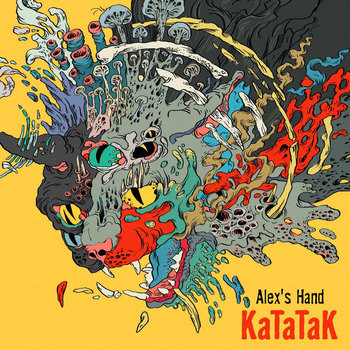
September 2017 · 5 tracks
KaTaTaK
The fourth studio album, with jazz and orchestral elements and story-driven pieces
June 2016 · 8 tracks
Künstler Scheiße
Avant-rock blending progressive rock, jazz-rock and orchestral textures with a rotating lineup of guests

April 2016 · 12 tracks
Goblinsz...?1!
An improvised session by Nic Barnes and Kellen Mills with guest Adam Meszaros
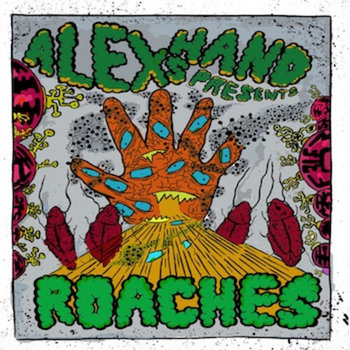
March 2014 · 15 tracks
Alex's Hand presents: The Roaches
A concept album with shifting styles, spoken-word interludes and a pulpy, cinematic feel
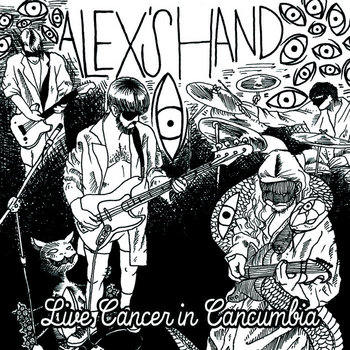
September 2013 · 5 tracks
Cancumbia
Live at Columbia City Theater for Seattle's Seaprog Festival, June 2013
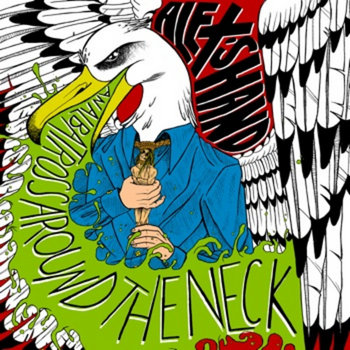
June 2013 · 12 tracks
An Albatross Around The Neck
The album that followed the Madame Psychosis EP

April 2013 · 7 tracks
This cat is a genius.
B-sides and off-cuts previewing the debut album
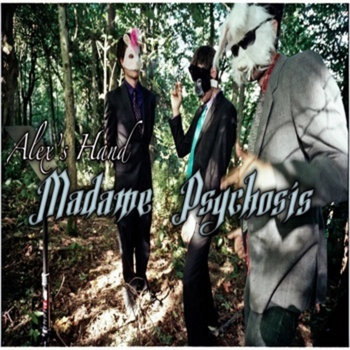
1 of 9
1 of 3
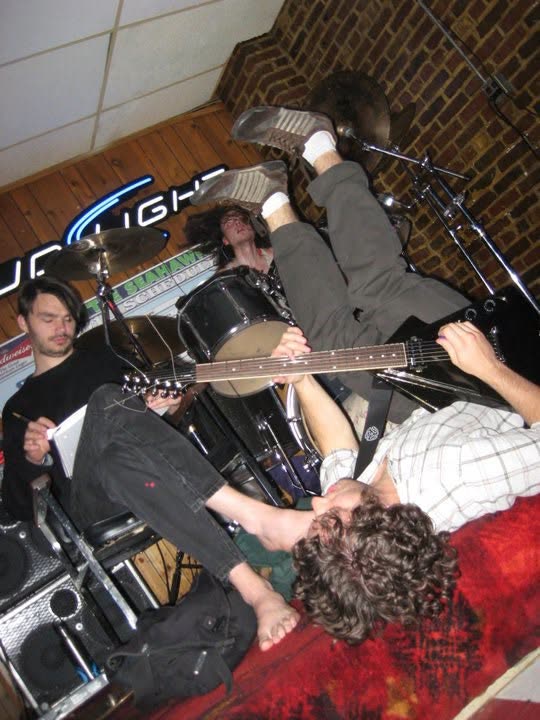
A weekly builder's notebook.
No. 15 of 17sideways scroll or arrow keys
- 15LetterThe Town Has to Let You Leave7 November 2026
- 16LetterSomewhere You Can Actually Go7 November 2026
- 17LetterI Was Still Using That7 November 2026
- 14LetterAll This Was Obvious to Me16 October 2026
- 13LetterThe Other End of the Button9 October 2026
- 12LetterEnough Room for the Thing4 October 2026
- 11LetterThe Page Goes With You27 September 2026
- 10LetterSome Assembly Between the Pieces18 September 2026
- 9LetterA Small Permission to Stop11 September 2026
- 8LetterThe Error Grew a Handle5 September 2026
- 7LetterThe Question Arrived First28 August 2026
- 6LetterSilence Got a Deadline21 August 2026
- 5LetterThe Collapse Was Rehearsed18 August 2026
- 4LetterThe Past Had Fingerprints9 August 2026
- 3LetterThe Nouns Have Paperwork2 August 2026
- 2LetterThe Runtime Has To Wear Shoes26 July 2026
- 1LetterA Little Mechanical Witness13 July 2026
The Town Has to Let You Leave
Sector Zero earns a way out of scarcity, Job Toast checks what it actually saved, and Chimera finds an expensive habit hiding inside its painted world.
Delayed publication of the 2026-W43 working-week draft, published 2026-11-07. Progress and remaining checks below describe that week, not new claims as of publication.
A mine is an excellent way to get metal, provided you already have enough metal to build a mine.
I can spend a surprising amount of time arranging everything that comes after this. The housing, the farm, the people arriving with their little expectations, the pleasant business of turning a patch of ground into somewhere worth returning to. Meanwhile the player is standing beside an empty supply box, studying my beautiful diagram of things they cannot afford.
There should probably be something to do here.
In Sector Zero, that became a salvage shift. Ashfall’s colony management now offers repeatable work near the landing pad: spend one world cycle recovering scrap, receive forty metal and one travel supply. No entry fee, no building prerequisite, no combat victory required. You can begin with nothing.
The rest of the colony keeps moving while you work. Buildings finish, existing production runs, food and water get consumed, settlers can arrive. The reward comes after that cycle. I wanted a way back into the economy that belonged to the economy, with time passing and consequences continuing around it.
The first estimate said twenty shifts would get the settlement going. The simulation disagreed. The accepted route takes twenty-five shifts to build the five basic buildings and reach ten settlers, with the building orders and travel controls requiring their own clicks. Apparently even my imaginary construction estimates require supervision.
The tests follow the ordinary controls from a fresh galaxy through arrival, work, construction, departure, return and reload. Another case starts after a failed expedition and reaches an operational mine without erasing the failure. Holding Enter cannot turn one shift into an accidental career in scrap recovery, and an old request cannot award the same cargo twice.
The work merged on October 22, and its deployment completed successfully. My remaining release check is the whole journey again on the deployed game. Trading and the broader settlement balance still need work.
But the colony has acquired a useful property. Failure can leave you with something to do next.
I went back to an earlier point in Job Toast too, before the application journey I followed last week: the moment a job gets saved from a connected chat.
The old shortcut was reasonable enough to be troublesome. If the assistant supplied a description with enough text, the save path could trust it and skip reading the posting. But a substantial fragment is still a fragment. Benefits and legal language can occupy plenty of space while leaving out what the person would actually be doing all day.
The page reader had another limitation. It looked for the posting’s structured data, the machine-readable description tucked into the page. Some pages contained the useful words in their ordinary markup instead. We could reach the page and still come home empty-handed.
The correction checks the posting on every URL save, gives that work an eight-second deadline, and uses the fuller extractor that can read both forms. Supplied text survives unless the page offers a better description. The response also says where the saved words came from and whether background recovery was actually queued.
That last detail gives the assistant something more useful to say than a cheerful, undifferentiated “saved.” It can distinguish keeping the job from successfully recovering its missing text.
The recorded live-page comparison recovered full reference-length descriptions for empty and partial inputs across all eight readable test postings. Two blocked sources remained blocked; their tests establish preservation of supplied text, not successful extraction. One live page also replaced an already complete paste because the comparison preferred it. That is a tradeoff I want to watch.
This repair is merged. Those checks fetched real pages but used local test storage. A save through the deployed connector with a dedicated test account remains the next check.
Meanwhile, Chimera had enough scenery to make me suspect the scenery.
The native 3D build now has a painted courtyard and street, drawn residents, conversations, and a cape doing considerably more dramatic work than its owner. This week’s look settled on ink lines, flat colour, lavender shadows and paper grain. The earlier plastic-toy quality finally started giving way to the drawing.
And the packaged build was running at around twenty-five frames a second.
Removing the expensive lighting system had barely changed that number. The measurements pointed somewhere less picturesque: the pass that smooths jagged edges was taking roughly seven and a half milliseconds of a graphics frame already close to twenty milliseconds.
My display refreshes fifty times a second. Twenty milliseconds is its interval. A frame that narrowly misses that interval can wait for the next one, turning a small excess into a much larger visible delay. The same build could hover near fifty frames a second or fall toward twenty-five depending on the surrounding load. A very small ledge, a surprisingly long fall.
There was a second trap in measuring it. Put the game behind another application and the operating system throttles it. Those samples said more about which window had focus than about the town. The investigation started counting only focused frames.
Switching to a cheaper edge-smoothing method kept the accepted ink, grain and shadow treatment visually intact in the comparison. The rebuilt package averaged 49.9 frames a second over a focused sixty-second courtyard sample. That is a stationary local measurement, with occasional slower frames, and I still owe it a measured route with camera movement. It does not establish sixty frames a second on another display.
I like that the expensive thing turned out to be something I could barely see. The lavender stayed. The paper stayed. The strange people around the well stayed.
There is a particular pleasure in reaching the point where a place can disappoint you in ordinary ways. The camera catches a tree. The shopkeeper’s collar needs attention. You walk down the street and wonder what ought to be around the corner.
I have spent a long time trying to make that street exist. Now I want to take a walk.
Somewhere You Can Actually Go
Chimera opens its first public demo, Sector Zero earns a way home, and the small journeys through Job Toast and my portfolio get more dependable.
Delayed publication of the 2026-W44 working-week draft, published 2026-11-07. Progress and remaining checks below describe that week, not new claims as of publication.
A road in a game makes a promise before anybody writes dialogue.
There is something over there, it says, and you can go to it. Which is quite a lot to promise. The mountain might be scenery, the gate might be locked, the road might belong to a version of the world that only exists when its maker starts the application with a particular incantation. I am increasingly interested in what happens when you put the incantations away.
Chimera now has its first public Mac demo. You can walk through Havenwood, leave the harbour along the coast road and reach the Long Road, with its river crossings, repairable cart and hidden hollow. It requires macOS 14 or newer on Apple silicon. It is an early game, with plenty still showing its seams, but there is an actual download at the other end of that sentence.
Getting there exposed a fairly fundamental difference between having built a road and having put it in the game.
The Long Road had been created through the development path. In the release configuration, the code that brought it into existence was disabled. The town could load perfectly well while an entire destination declined to participate.
The correction makes the road load during ordinary play, keeping the development controls separate. Then a causeway connected the harbour to it. The packaged check walked out and back through eighteen route segments, without falling into the sea or using a menu to skip the distance. Continue restored Kai at the quay, halfway across and at the arrival.
And then I played it. The causeway felt long. Kai’s stance and movement needed work. Some residents had the social energy of furniture.
Those observations belong beside the successful checks. They tell me what the journey feels like after the software has established that it is possible. Later internal builds have continued into movement, weather and a furnished hall, but the public demo remains 0.1.0. Those changes need their own acceptance.
Sector Zero raised a less picturesque travel question: what happens when you arrive somewhere and cannot afford to leave?
Ashfall now has a repeatable salvage shift with no entry cost. It advances the world by one cycle and earns colony metal and travel supply, while construction, consumption and settler growth continue. The recovery path works even when both stocks are empty. You can get back into the game through work.
The tested building sequence reaches five operational buildings and ten settlers in twenty-five shifts. That number came from running the simulation; the earlier estimate had been twenty. Apparently my imaginary settlers also require me to check the arithmetic.
The next change gives the Quartermaster a useful exchange: twenty colony metal for one travel supply. The shop had carried assumptions from the older campaign, offering things a fresh Galaxy player could not use. Now the offer belongs to the economy you are actually standing in.
The trade reads the current save again before spending, refuses an outdated offer and records the exchange once. Holding the interaction key cannot buy the same thing repeatedly. The full browser route starts a new game, works, builds, trades, leaves, returns and reloads.
Salvage is merged. The trade addition has passed its automated checks but remains an open change awaiting review and my final playtest before release. Twenty-five successful shifts prove a route through the economy. I still have to decide whether I want to spend that time there.
Job Toast found a journey that could finish on the server while leaving the person at the starting line.
When connecting another app, an approval could be accepted and the browser could stay on the consent page. Its security rules were blocking the onward navigation after the form submission. Click again, reasonably enough, and the request had already been consumed. Now it appeared to have expired.
The first click worked. That was part of the problem.
The repair gives the browser a small confirmation page with onward navigation and a visible Continue link. It also remembers the first decision for the request’s remaining lifetime, so another click returns the same answer. The authorization code still works only once.
The backend checks cover repeated approval, repeated denial and attempts from another account. They passed, and the correction is merged. The remaining acceptance step is the real browser journey through the deployed callbacks. A server test can inspect the response; the person still needs to arrive in the app they were connecting.
My portfolio has acquired a more agreeable reason to keep moving: music.
The new home brings projects, essays, stories and recordings into a continuous sequence. Its music player lives across page navigation, so moving from home into the Atlas can leave the track playing. Previously that navigation loaded a new page and ended the song. A technically valid way to browse a website, an unnecessarily abrupt way to treat a band.
Joining two embedded music services took some negotiation. One requires a press inside its own player before its tracks can enter the shared queue. Another transition needs a brief pause at the end of a preview. The controls now account for those differences.
The retained desktop browser checks follow playback between services and across the route change. Mobile, background playback and long sessions remain unverified.
I also fixed the reading areas catching a continuous trackpad gesture indefinitely. They now hold the last little bit of momentum at the end of the text, then let the page move. You should be able to finish a paragraph and keep going without learning the paragraph’s release procedure.
I think the music is the part I will enjoy most. Someone might arrive to look at a project, start a track, wander into a story and stay for a few minutes longer than they intended. I cannot test whether that will happen.
But I can leave the song playing.
I Was Still Using That
Cerebro stages safer updates, Job Toast remembers your place, and a private Chimera study tests the journey out and back.
I would like the next version to arrive without making the current version somebody else's problem.
This seems a modest request until I remember who keeps building the next version. Me. I am quite capable of admiring a new room while the door behind me quietly forgets where it leads, and then spending the rest of the afternoon reconstructing an arrangement that was perfectly useful before I improved it.
Lately I have been paying more attention to the trip back.
In Cerebro, that started with an app that was still running from a copy the installation process had renamed. The familiar application path said one thing. The operating system's record of the running program said another. Folder-access requests could carry the identity of the old location, and background processes could retain an earlier association of their own.
I had given the app a former address while it was still at home.
The installer now prepares the replacement separately and leaves the running app alone. It reports that the candidate is staged, with a command to apply it after a normal quit. When installation can proceed, it checks the signing identity, verifies the copied app, checks again for a running process and keeps the previous version available for recovery.
The interesting test is the interruption between those steps: what if the app starts while the new copy is being prepared? The installer has to notice. A check at the beginning cannot make a promise about the end.
The repair is on local main. The recorded live-process check left the installed executable unchanged, and the installer regression suite passed. I still need the complete quit, apply and relaunch check for session continuity and macOS permissions. This prevents one confusing installation behaviour; the remaining permission questions still need their own evidence.
Job Toast found a smaller disappearance in its new application workspace.
You scroll down the board, open a job, look at its materials, then return. Naturally you expect to find the board where you left it. The first implementation tried to remember that position after navigation had already removed the board. By then the browser could have shortened the scrollable area and clamped the position. We had carefully recorded where you weren't.
The correction captures the position when the link is activated, before the old view disappears. Returning waits for enough board content to exist before restoring it. The browser check followed the actual journey, including Back, and recovered the original position.
The workspace review also found a saved contact note missing from the data returned to the interface. The note was in the database. One step preparing it for the screen had omitted it. A new home for the information had exposed a hole in the journey there.
These fixes remain part of the locally verified workspace branch. The recorded handoff still leaves my manual status-control check, product acceptance and merge ahead. I want the extra room for materials, preparation and people, but I also want to be able to step into it without losing my place outside.
Chimera made that concern rather larger.
A private, developer-only Salt Road study runs between buried hull fragments towards the wall of Kesler Pi. This is a separate study, not a new walkable connection in the public open world. There is a threshold you can approach, a huge opening ahead, and a deliberate stop because the interior has not been built. The private Development package has automated evidence for entering the area, walking the corridor, reaching the barrier and returning to the campaign place.

Getting there produced a peculiar regression. Adding the distant landscape appeared to change patches of shading back in town, where none of the new landscape was visible. Removing the new actors left the difference. Re-importing only the old town reproduced it.
The act of rebuilding the scene had become part of the experiment.
So the comparison needed an old town that had gone through the same import process. That control separated the shading change caused by re-importing from anything caused by the new road. The original comparison stayed in the record. Otherwise it would have been very easy to spend a day adjusting a desert to repair a shadow it had never cast.
The pictures still have work to do. The opening becomes a pale recess close up, and one review camera misses most of the buried fragments. My own walk through the packaged route remains ahead; an automated trip down its centre cannot settle how the place feels, or what happens along every edge.
I spend a lot of time making new places to go. I am starting to appreciate the smaller kindness of finding my place again when I return.
All This Was Obvious to Me
Cerebro stops rereading its past, Job Toast follows an application between surfaces, and my publishing tools meet a reader who wasn't there for the explanation.
I am an unreliable test audience for things I have made.
I know what the button means. I know why the sentence starts halfway through an idea, because the other half has been living in my head for three days. I can look at a small purple rectangle and supply its entire childhood, its intentions, the difficult conversation that led to its current position beside another small purple rectangle.
A stranger sees two rectangles.
This week involved several versions of that discovery, including one where the software itself knew far too much and insisted on remembering all of it before letting me do anything new.
Cerebro had acquired an expensive habit. Every workspace refresh decoded the whole conversation event log, including the histories of agents whose conversations had not changed. While an agent was running, refreshes could be requested four times a second. The reading also held the store lock, so creating something new could wait behind the app's comprehensive review of everything that had already happened.
I wanted another agent. The app wanted to finish its memoirs.
The correction gives each agent an index of where its records sit in the file. New entries extend that index, unchanged histories keep their existing projections, and decoding an agent's conversation happens outside the lock needed for writes. A refresh requested during another refresh also gets a subsequent turn instead of disappearing.
There is a satisfying amount of restraint in this. The history stays. The app stops treating every glance at the room as a reason to reconstruct the building.
The recorded debug benchmark, using a copy of a large local store, took an unchanged refresh from roughly four seconds to two milliseconds. That measures one particular path, not every interaction in the app. The regression tests check the less glamorous obligations too: appended records are found, replacing or shrinking the file rebuilds the index, and reading a conversation leaves the write lock available.
The change is on local main. The replacement public release remains held for separate clean-user acceptance, so the download is not a promise that this development version has reached everyone yet.
I like the feature that emerges from all this bookkeeping: you ask for something, and the software has enough attention left to notice.
Job Toast had a different problem with noticing.
After the description repairs I wrote about last week, I followed a saved job further through the journey: save it in a connected chat, open its application in the browser extension, finish the local test flow, then ask the assistant what happened. One job should remain one job throughout that trip. Its original application date should survive, and an old confirmation arriving late should not pull an interview back into the applied column.
The installed-extension check found a mistake that the separate pieces had tolerated. An application page could contain both a form and structured information about the job. The classifier saw the job information first, called the page a posting, and never enabled the application tracking that the form needed.
Of course the application page still described the job. What a peculiar thing to punish it for.
The correction gives strong application-form evidence priority while preserving the posting's identity and extracted details. The server can also recognise the saved job by its canonical URL when navigation has lost the extension's matched identifier. Later confirmation signals preserve an existing application date and leave more advanced statuses alone.
The retained browser and database checks follow a synthetic account through that path. They establish one applied job, linked submission progress, and a later interview status that survives another confirmation. The test form's submit counter stays at zero. Nobody applied for a real job to demonstrate that the software could remember one.
These corrections are merged into the tracked main branch. Distribution and a deployed journey remain separate work. My next acceptance check is the same trip against the released pieces, with a dedicated test account, until the assistant and extension agree about the same saved job at the other end.
Meanwhile, my publishing tools needed somebody who knew considerably less.
It is remarkably easy to produce a reel that makes sense to its producer. The plan explains the subject, the caption supplies the missing context, the script contains a perfectly serviceable story, and by the time the rendered video arrives I have mentally repaired it before pressing play. A tiny heading can stand in for a whole paragraph if you already know the paragraph.
So I added a cold reader. It sees the first slide, or eight frames sampled across a reel, without the plan or caption, and has to say what the thing is about. It also reports small text, unclear references and places where the sequence appears to stall. The reel check is deliberately sound-off.
The early results were usefully irritating. Rewriting one carousel to identify its subject moved the reader's score from three to four. Rewriting and narrating a Job Toast reel left its sound-off score at three. The spoken explanation had improved, but the picture still contained small text and beats that barely said anything by themselves.
I had been editing sentences around a rendering problem.
The review machinery now lays its sampled frames out in two rows, keeping the text more inspectable, and records its findings beside the asset. It remains in report mode. A model's opinion is something I can investigate; it has not earned the authority to declare that a stranger will understand a joke, and it cannot hear whether the narration is being swallowed by the music. The phone-sized watch and listen still belong to me.
That is probably the part I most want to keep. I can automate the production, the sampling, the awkward little report that says the subject remains unclear. But eventually I have to sit there with the thing I made and resist completing it in my head.
Let the page contain both the job and the form. Let the old conversations rest. Turn the sound off and watch the words I actually put on the screen.
The missing explanation is mine to supply.
The Other End of the Button
Cerebro gets phone controls, shutdown acquires an ending, and Job Toast repairs a small piece of its past.
Retry is a surprisingly optimistic word.
It assumes we know what happened the first time. Something failed, presumably, and now we can do it again. But sometimes the work happened and the reply disappeared, which leaves you looking at a button that might mean try again or might mean do the same thing twice. The button is perfectly calm about this. It has room for five letters.
I have considerably more questions.
This week Cerebro gained a phone interface, and some of the interesting work happened inside that little gap between sending an instruction and knowing where it went.
After last week’s reduction of the desktop app, Remote extends the surviving centre: projects, agents and conversations. The agents still run on the Mac, which has to remain awake and connected. A paired phone browser reaches them over the owner’s private network. It can read the conversation, send a message, stop work, answer questions and respond to supported approval requests.
Which sounds pleasantly straightforward until the phone loses a response.
The new interface keeps the identity of that request and offers to retry the same one. The receiving side can recognise it instead of launching another copy. There is also a test for a wonderfully ordinary complication: you send something to one agent, lose the reply, switch to another agent and start writing. Retrying the first request must still address the first agent. It must leave the second draft alone.
These are the sorts of details that disappear when a feature is described as “mobile access.” There are people at both ends of the button, even when one of those people is software with a name I gave it.
I also made the stream of tool activity optional on the phone. The pending question or approval remains visible. A small screen is an excellent editor: the thing waiting for your decision deserves space before the machinery describing how it got there.
Model and effort controls have reached the same surface, with changes unavailable during an active run. They use the agent’s existing provider and permission settings. Moving a control into your pocket should not quietly change what it is allowed to do.
Remote is on local main. The retained tests exercise request replay, access revocation and browser interactions, but they do not establish a real phone connection through the private network or live acceptance of a provider approval. This is development progress, separate from the downloadable beta. I want the convenience. I still have to prove the journey.
Elsewhere, I ran into the opposite end of an operation: getting software to stop.
There is something almost sociable about a process that receives a shutdown signal, closes the front door, says it is leaving, and then remains in the hallway because several other things are still attached to it. Beginning the goodbye is easy. Actually departing takes coordination.
The useful lesson was to give the whole departure one deadline. Stop accepting new work, allow existing work a bounded chance to finish, distinguish the cleanup that determines success from the optional reporting, and then exit. Giving every step a fresh allowance can turn a supposedly bounded shutdown into a succession of small extensions.
And if work had to be interrupted, the result should retain that fact. A process becoming absent does not prove it finished politely. I am taking away a more specific definition of graceful: preserve what you can, say what you could not, and leave. That is a design lesson, not a claim that every live shutdown has been settled.
Job Toast supplied the week’s most tangible repair.
Last week I wrote about recovering the missing parts of job descriptions. This week continued downstream, where the description and the match score have to agree about what is ready. Independent workers could reach the same saved job in the wrong order: one was still recovering the posting while another was ready to judge the match.
The correction makes scoring wait for active description recovery, while allowing other ready jobs to continue. It also checks that the description is usable before asking AI to assess it. A score produced promptly from inadequate material is still inadequate. It just has a number attached.
That correction reached the deployed code. But changing what happens to the next saved job does not fill the holes in jobs already saved. The past needs its own repair.
So I prepared a separate recovery tool that starts by producing a reviewable proposal. It checks the intended records again when the repair runs, refuses to overwrite a description that has since been filled, and rolls back the batch if the expected state has changed. The database tests deliberately exercise those disagreements. I want a repair to notice when its instructions have become old news.
Finding the actual text was less tidy. A successful page response could contain a JavaScript shell or unrelated content. Rendering some pages in a browser exposed the matching descriptions; other sources remained unresolved. An available page and an available posting are different things.
Two descriptions were restored in an explicitly approved production batch. The retained checks confirmed that both matched the reviewed source text and that unrelated fields and queue records stayed unchanged. No scoring was requested. Evidence that an account has an AI grant does not, by itself, establish permission for this particular recovery action.
Two is a small number beside the ambition of fixing a pipeline. But it is a satisfying size for an ending: two blank places now contain the words they were supposed to keep, and the rest of each record is still where its owner left it.
I can look at that and know what happened.
Enough Room for the Thing
Cerebro gets smaller, Job Toast recovers the missing parts of a posting, and Chimera builds one corner carefully enough to build it again.
I have a generous definition of a small addition.
A panel is small. A setting is small. A system that decides which settings apply to which panel under which circumstances presumably consists of small things, and therefore must also be small. You can get quite far with this reasoning. Eventually you have built a substantial administrative district around a button you wanted to click.
And because you built it, you know why everything is there. This is part of the problem. Every piece has an explanation, every explanation sounds reasonable, and somehow you are still standing in the kitchen unable to find the kettle.
This week I took a considerable amount out of Cerebro.
After last week’s public beta, the local development version went through a much more fundamental change than another round of polish. I stripped it back around the agents, projects, conversations and canvas. The provider command-line tools keep responsibility for their sessions, configuration and permission decisions. Cerebro supplies the place where I can see and work with them.
The old implementation is preserved. But much of its machinery is no longer part of the active app, and previously integrated areas, including the Brain and social tools, have been parked. There are still unfinished interfaces and setup checks. Getting smaller has required being more specific about what actually remains.
One surviving detail captures the difficulty better than the deletion count. If writing the conversation log fails, the app still needs to stop displaying the agent as running. The earlier error path tried to record the failure before clearing that state. Which is an understandable instinct until you remember that recording things is precisely the operation that has just broken.
The correction attempts the recording, still performs the state cleanup, and tells the live interface what happened. Its regression test deliberately damages the log. I like a test willing to kick the furniture a little.
The reduction checkpoint recorded 873 tests, with one optional rendering check skipped and no failures. The smaller foundation is now on local main and installed in the Local app, with subsequent work making the terminals readable and arranging them by project. The public beta remains a separate release. There is plenty left to use, judge and improve, but I can explain the centre of the app in a sentence again.
That feels good.
Meanwhile, Job Toast needed more of something: the actual job description.
A connector could save a posting with only the benefits or legal language from its final section. The field contained text, so the server treated it as present and skipped the extraction that would have filled an empty field. You could successfully save the fact that a company offered dental insurance while losing the part about what it wanted you to do all day.
The obvious distinction, empty versus filled, was too crude.
The repair reads the posting page and looks for its structured description, keeping the fuller text when it improves what the client supplied. The background worker uses that source too. A later correction handles the case where an AI response has produced a tidy summary of a much longer posting. A summary can be useful, but here the person asked to keep the posting.
There is a necessary hesitation in this seemingly straightforward act of reading: if the page contains several structured job postings, the extractor declines to choose the first one. More text from the wrong job would be a remarkably unhelpful improvement.
And the test cases have to protect ordinary short descriptions. Words about healthcare, budgets or flexible hours can belong to the work itself. Detecting a benefits-only footer must not turn into rejecting every job that happens to mention a benefit.
Underneath this, extraction had another problem. Whole pages were too large for a fallback model’s allowance, so the supposed backup could fail before doing anything useful. The changes trim the input around the relevant content, stop bursts of queue notifications from starting overlapping processing loops, and let rate-limited work wait without spending its retry allowance on the wait.
These repairs are merged into the tracked main branch. The inspected code and regression cases establish the changes; I have not established a fresh production journey through the whole repaired path. What interests me is how many different failures were hiding behind a populated text box. It looked finished. It contained words. Neither was quite enough.
Chimera offered a more pleasant place to inspect what was there.
The new Lune Corner study is deliberately small: a shop, a fountain, a tree, a few composed views, enough ground for Kai to walk across. It is a separate local art candidate, with editable source assets and a generator that can construct the environment again.
That last part became its own little investigation. Two builds initially disagreed because the exporter divided surfaces into triangles differently. Making that division explicit brought the geometry into agreement. Tiny floating-point differences in surface normals remained, so the exported files still had different hashes.
The comparison now says exactly that. Positions, materials and transforms match; triangle geometry and normals meet the stated precision checks. The files are not identical. There is something satisfying about letting the answer keep its awkward second sentence.
The retained runtime and packaged-app checks each passed thirteen cases, covering actual movement, stopping, camera changes, shaders and collisions. The fountain stops you walking through it. The camera returns to its authored position. Modest achievements, perhaps, but useful ones when you intend to put a person in a place.
Artistically, it is still cleaner and more model-like than the richly illustrated town I want. The distant buildings are simple scenery, the surfaces need more character, and there are no working shop interactions or interiors in this study. Passing the checks does not settle whether I love the picture.
For now I have one corner I can walk around, inspect from another angle, take apart and make again. I can spend time on the curve of a roof without first furnishing an entire imaginary city.
The shop is closed. There is room to work.
The Page Goes With You
Job Toast makes room for a login, Cerebro reaches public beta, and the Atlas takes the home page through a wormhole.
Apparently I wanted a black hole on my website.
There are simpler ways to organize a portfolio. A list, for example. Lists have an excellent record of containing things, and almost none of them require you to consider what happens to keyboard focus during interstellar travel. But I had projects, music, writing, a growing collection of things I wanted to put beside each other, and somewhere in the process beside became orbiting.
I can defend some of this as navigation. The rest is because I wanted to see it.
The week also supplied a useful counterweight: before you bend a page into space, it helps if an ordinary page can finish signing somebody in.
Job Toast had a database connection problem that reached the browser extension as an apparently broken login. The website could have a session while the request that lets the extension pick it up failed. From the outside, these are two parts of one action. You signed in. Why are you being asked to sign in?
Underneath, several database clients were making individually reasonable assumptions about how much room they could occupy. Each pool had its own default allowance, while the database had one allowance for the entire application. Nobody was adding up the chairs.
And then there was the middleware order. Static files passed through session handling, so requests for the page's assets could also read the session row. The browser was trying to assemble a screen and, along the way, repeatedly asking the database who you were.
The repair gives the different pools explicit, smaller budgets and serves static files before session handling. Background workers get a smaller pool allowance too. These changes are merged to main. The inspected evidence establishes the correction in code, without establishing a fresh production login journey after it.
I like the specificity of this one. The symptom suggested an identity problem, but part of the answer was to stop asking an identity question where none was needed. A stylesheet has very little interest in your personal history.
Cerebro crossed a larger threshold: the public Mac beta was released this week. Version 0.1.0 is signed and notarized, for Apple silicon Macs running macOS 14 or newer, using the provider command-line tools you already have installed.
After several issues of describing local work and the distance still left to release, it is nice to be able to write that sentence.

The release work also found a small disagreement with considerable practical consequences. The release interface could say a draft was valid and offer to build it, while the builder's own checks would reject it. Feature evidence could be stale. A saved draft could still carry a build number that had already been used.
So you could receive permission from the button to begin an operation the next layer already knew it could not perform. A tiny bureaucracy, installed entirely on your own computer.
The correction makes readiness use the builder's actual checks, including whether the proposed manifest can be committed. A stale saved draft advances beyond existing build numbers, and the checks run again when Build is clicked. That second check matters because the world is allowed to change while a window remains open.
Later candidate work exposed another boundary: a launched process could finish after its caller had dropped the object responsible for collecting its output. If process exit won the race against the output callback, the final text and completion event could disappear.
The fix keeps that object alive through completion, then releases the relationship once cleanup is done. The regression case deliberately discards the returned handle and still expects the child's final words and successful exit. Those later repairs are on local main; their presence there does not establish that they are in the downloadable beta.
I find myself increasingly interested in these last few inches of an operation. The work ran. Did its result reach anyone? Who remains responsible after the person who started it has wandered off?
Anyways, back to the black hole.
The new Atlas arranges the site's projects, albums, and writing into a galaxy map. The home page reaches it through a wormhole, with a synthesized score and a view that opens onto the surrounding collections. The change is merged, and this week's changelog records it as live.

The part I particularly enjoyed was getting the departure to belong to the page you were actually looking at. The transition takes a rendered snapshot of the live home page, including its current geometry, text wrapping, images, and particle frame, then bends that image into the journey. If the substitute page differs at the moment of departure, you see the swap. The illusion gets caught changing clothes.
That meant paying attention to ordinary layout details inside an unreasonable visual idea.
It also meant giving the journey a tolerable relationship with interruption. Leaving early stops the music. A rendering failure has a route through to the Atlas. Browsers without WebGL2 get the classic view. The browser harness includes checks for skipping, arrival focus, and graphics-context loss; the timeline tests look for jumps where one phase becomes another.
And the names are clickable. After all that effort putting something in space, you should be able to open it by clicking the words that tell you what it is.
There is still a list underneath my galaxy. I think that is part of why I like it. You can follow the light around the black hole, find something you didn't know was there, spend a moment looking. Or you can know exactly what you came for and open it.
I wanted the little journey. You might just want the project.
The title works too.
Some Assembly Between the Pieces
Cerebro learns to find its notebook, Job Toast follows a missing score, and a repaired video waits for a safe way back into the queue.
I like connecting things. This is probably how I end up maintaining so many things that need connecting.
You have a notebook, an assistant, a button that introduces them, and for a moment the arrangement seems complete. The notebook contains your thoughts. The assistant would like some thoughts. We have put them beside each other. Surely the difficult part is over.
Then the assistant says it cannot find anything, and you begin inspecting the considerable distance hidden inside the word connected.
Cerebro gave me several versions of this distance this week. Its Conductor could lose access to the Brain because reading the notebook depended on an unrelated plugin being active. Another path started fresh provider conversations while telling them to reuse context from an earlier conversation they had never received. Imagine meeting somebody for the first time and opening with, anyways, as you already know.
The repairs remove that unrelated dependency and send the full application context on the affected turns. But they also exposed a more ordinary problem: the local app had no notebook configured. The assistant was trying to explain an elaborate failure of communication before establishing whether anyone had plugged in the telephone.
So the Brain now gets an explicit status in the Conductor’s context, including when it is disconnected and where to connect it. There is also a connection flow that builds the indexes the app needs from a folder of notes, keeping those generated files in the app’s own storage. If the notebook already supplies its own compiled index, that one takes precedence.
That choice matters to me. Connecting an existing collection of thoughts should not require turning the collection into somebody else’s preferred filing cabinet.

The connection work is merged into local main, with focused tests for index creation, refresh after a note changes, and leaving settings untouched when the feature is disabled. The retained local-use record includes a successful connection and a working Brain. The release card remains at local testing, and the broader test run still records an unrelated packaging failure. There is a usable thing here. Public release is still another step.
While that work was coming together, a much smaller change nearly made old records unreadable.
Cerebro gained a new permission flag. Old records did not contain it; the new code understood its absence as false. Sensible enough. But when the code wrote those records back out, it helpfully included the new field with its false value.
The archive checks its integrity by decoding records, encoding them again, and comparing the result with the stored digest. The meaning had survived. The encoded representation had changed. Every affected old archive could therefore look damaged to the new reader.
I find this kind of mistake almost reassuring in its specificity. Nothing mysterious happened. We added one apparently harmless fact, and the machine took us literally.
The correction writes the flag only when it is true, preserving the old representation when it is false. A regression test checks both cases. The existing archive fixture was doing its job when it complained; updating the fixture to make the complaint disappear would have removed the warning and kept the problem.
Sometimes the old test is the only person in the room who remembers what we promised.
Job Toast had a different disagreement between two parts of the same product. A job saved through the browser extension could arrive safely without entering the match-scoring queue.
The server had grouped integration-token callers together and skipped several expensive follow-up operations for them. That boundary had a reason to exist. But the extension also arrived through that boundary, carrying permission to use AI, and the broad classification swallowed the more specific permission.
The correction on the current branch checks that permission when deciding whether to queue match scoring. Ordinary signed-in saves retain their existing behavior, integration tokens without AI access remain excluded, and a scoring-queue failure does not turn an already saved job into a failed save.
That last distinction is easy to lose while making the product more helpful. You asked it to keep something. It should keep it, even if its additional opinion about the thing is temporarily unavailable.
The branch includes regression cases for those permission boundaries and the queue-failure path. I have not established a merge or a production run for this correction. The useful progress is that the missing score now has a concrete cause, a bounded change, and tests aimed at the place where the two parts disagreed.
My marketing tools encountered a less philosophical boundary: a video’s audio bitrate.
The publishing adapter had parked an item before upload. Repairing the audio file was only half the recovery, because the publishing records still correctly remembered an item that should not proceed. Last week I wrote about counting what remained in the queue. This was about letting one particular item return without giving the whole queue amnesia.
The new recovery script probes the repaired file, checks that the recorded failure concerns audio bitrate, and refuses automatic release if it finds evidence of an upload session or an already published post. It retains the original failure inside the recovery record and assigns another scheduled slot. The script is on main; the evidence I inspected does not establish a completed retry.
I like that the failure gets to remain in the story. We do not have to pretend the first attempt was fine in order to permit another one.
And perhaps that is why I keep connecting these things, despite the expanding collection of cables under the desk. There is a particular pleasure in reaching for a note and finding it, saving a job and being allowed to move on, watching an old record survive a new idea about how the software should work.
For a moment, you can stop thinking about the connection.
You have your thought back.
A Small Permission to Stop
Job Toast puts a deadline on helpfulness, the publishing queue learns what is actually left, and Sector Zero makes room to look before leaving.
There is a particular kind of waiting that happens after the useful part is finished.
You have the information, you could leave, you have one hand on the door, but the software is still improving something. A spinner rotates with the quiet confidence of a person who has never missed a train. Perhaps the answer will become better. Perhaps we live here now.
I spent part of this week giving things permission to stop. Waiting, counting, dragging a card across a board. Small permissions, although computers can make a surprisingly large administrative project out of letting you put something down.
Job Toast had a good example in its browser extension. It extracts details from a job page, then can ask AI to fill the gaps. Useful arrangement. But the enhancement could remain pending, leaving the interface announcing that something better was coming without establishing when coming would become late.
The correction puts a twenty-second deadline around the whole enhancement attempt, beginning before the extension retrieves the page HTML. That starting point matters. A timeout attached only to the model request cannot help when the request never gets started.
And stopping the spinner is only the visible half. Late page HTML must not wake up and launch a request after the deadline, and a late AI response must not arrive carrying fresh instructions for a form that has already moved on. The attempt becomes terminal, the pending request gets an abort signal, and the details already extracted remain available.
The focused regression checks cover both late arrivals. The recorded build passed, the development extension was updated, and the fix is merged to main. That establishes a working development package, without making a claim about browser-store distribution.
The board needed a smaller permission: you should be able to pick up a job card and change your mind. Canceling a drag could leave the celebration code looking for a destination that did not exist. Somewhere in there, confetti had become a prerequisite for ordinary life.
That repair is merged too. Canceled drops return safely, moves preserve both the new status and position in the immediate display, and bursts of dragging share a delayed refresh instead of repeatedly fetching the whole list. There is something satisfying about making a board less excited by the movement of a rectangle.
My marketing automation had the opposite problem. It was perfectly willing to stop, and had developed a convincing reason to do so.
The queue looked full.
It contained rows that the publishing system had already posted, while the daily digest had not yet advanced past them. Both systems were doing their own work, at their own speed, and the refill job was asking the digest how much publishing inventory remained. Imagine checking the fridge by reading yesterday’s shopping list. Eggs, yes. Terrific. Breakfast is assured.
The new observation counts rows that remain unposted, using the publisher’s records. The digest keeps its own definition of readiness, because changing the meaning of a shared number would spread the misunderstanding into several more rooms.
Then came the more interesting question: how do you know the refill happened?
A process can fail after adding content. It can also finish cleanly without adding anything. And the amount left to publish can shrink during a successful refill if the publisher is consuming rows at the same time. Watching that number alone could persuade the system to produce the same batch twice.
So the wrapper compares the total row count before and after generation. If rows were added, it does not send another provider in to repeat the work. If nothing was added, a clean exit does not prevent fallback. If the observation itself is invalid, it stops rather than guessing its way into another batch.
Those changes are on main, with regression cases for failed processes that still append, successful processes that append nothing, and unreadable observations. I have not established a complete unattended publishing cycle from that evidence. What I can see is a much better question being asked at the handoff: what changed while you were here?
The most pleasant version of this problem appeared in Sector Zero.
After last week’s opening, I worked on the place you go to decide where to go. The colony’s destinations had been presented as a vertical collection of cards. The new branch gives them a region map, with landmarks and route lines occupying the same saved coordinate space, an expedition origin, and a separate panel for the selected destination.
The important distinction is between looking at somewhere and committing to go there. Selecting a landmark preserves the save. Surveying or traveling is a separate action, with its cost visible. Unknown places also have to remain unknown, including in the information underneath the picture. An unexplored signal should not accidentally introduce itself through a helpful label.
The first mobile check found a label box overlapping another marker at 390 pixels. The correction let the label fit its contents instead of occupying an unnecessarily wide invisible rectangle. The saved geography stayed where it was. The interface stopped elbowing it.
The retained verification records 834 engine, colony, and sprite tests, plus thirty relevant browser checks passing without retries. Mobile coverage used touch emulation, and the encounter checks proved launch rather than an entire fight. This remains branch work, with no merged or deployed release established.
I like the moment in that map before anything happens. A wreck is selected. There is a route to it. There is a cost. You can inspect the place, consider the trip, decide you would rather stay at camp for a minute.
The galaxy can wait.
It has a button for when you’re ready.
The Error Grew a Handle
A morning surface, honest product tiers, two playable worlds, and the feedback loops that turn activity into evidence.
An error message is a room the software has locked you inside.
It can be exquisitely specific. It can name the provider, the environment, the preflight, the thing that failed before the other thing could begin, seventeen nouns standing in a red line like a brass plaque outside a government office, and still leave you there with no door.
Machines have this strange instinct to treat explanation as recovery. Here is what went wrong, they say. Anyways, good luck living here.
This week I started adding handles. Sunday morning found several more rooms, and a few new worlds outside them.
Bring your tools to breakfast
In Cerebro, a managed-provider setup failure now lands inside the Conductor transcript with a Retry action beside it. The cause appears where the work stopped. The next move lives next to the cause.
Then an audit found that an agent could arrive with my tools, skills, and instructions, and lose them because it had been connected to Cerebro's own tools. Isolation intended for a managed environment had spread into the path meant to inherit my existing setup. We had invited the carpenter inside and confiscated the toolbox.
The correction is in local main. Inherited agents keep the user's configuration, and project instructions sit beside native instructions. Claude's live check passed; Codex's remains open.
This morning the Today view also learned to gather scheduled jobs from several systems and place them beside the daily Brain note. That work is merged locally, covered by 1,320 focused tests, and verified in the development app. A follow-on branch is turning the pile into one daily brief with working note links, while preserving reminders and risks verbatim.
That last part is still branch work. A dashboard can collect every fact and still fail to answer the only morning question that matters: what deserves my attention?
Repair earns the next feature
Job Toast began the weekend with three retired AI model identifiers, an unavailable fallback chain, background work consuming the user's interactive allowance, confused billing paths, and too many worker processes for the small instance holding them.
Those repairs merged first. Then the product work could begin.
Today Job Toast gained interview preparation inside each job. Generated questions are available to free users; AI-drafted answers belong to Pro and remain editable before saving. The free cover-letter allowance moved from a generous-looking daily number to ten per calendar month, while paid model usage gained a monthly spending ceiling and a free-provider fallback when that budget is reached.
This is pricing work expressed as software. A paid tier should contain an actual advantage. A free tier should have a limit a person can understand. A product using paid models should know how much enthusiasm it can afford.
Both feature sets are merged to main. Production journeys remain a separate proof from the merge.
Evidence should survive the trip
Elsewhere in my work, I spent time with a quieter problem: a fact can survive being copied while the evidence for it disappears.
The receiving system gets the value. It does not necessarily get the reason it should trust the value. After a few moves, something inferred can look exactly like something verified.
The useful distinction was between preserving historical context and granting it authority. An incomplete old record can remain useful history without being promoted into proof. The repair keeps that distinction through the handoff and requires the receiving side to verify the evidence behind the stronger claim.
There is a temptation to fill the gap because the answer looks plausible and uncertainty is making the row untidy. But tidy uncertainty is still uncertainty. I would rather keep the missing piece visible than manufacture a more confident past.
A world has to become a place
Sector Zero crossed one threshold by merging a cinematic opening and companion-site redesign upstream. The game now has a front door that explains the choice between its persistent galaxy and legacy campaign, followed by a visual tour of the ways you can fight and the settlements between them.

Its next graphics branch is pushing deeper into first-person world detail and actor motion. That work follows the touch controls, focus fixes, and mission presentation built earlier in the week. A galaxy is partly lore and partly the unglamorous ownership of a key press.
Chimera made a different leap. A design that had lived mostly as a lineage of ideas became a packaged native 3D level: a town square, characters, an interior, dialogue choices, a small anomaly, and a local save. The first pass reached a verified playable route. Then the work split into actual rendered comparisons for richer materials, new architectural geometry, and a more illustrated treatment.

The comparison is useful because it refused to flatter the new thing. The candidate keeps the navigation and gameplay contracts and passed 125 checks, but the median frame time in the measured route rose from roughly seven to twelve milliseconds, and its 95th percentile still missed a consistent 60 FPS frame budget. The scene also does not yet reach the density of the target illustration.
Playable is a threshold. Beautiful is another one. Measured is how you avoid confusing the two.
The calendar is not a witness
The Marketing work spent the day closing the loop between making content and learning from it.
A read-only Instagram collector is now installed and has completed a live run across both brands. It keeps zero separate from missing data, compares posts at similar ages, and remains exploratory when the sample is too small. Three new Reel formats were rendered and inspected as previews, without sneaking them into a live queue.
The YouTube half is built but not fully connected. Basic channel data is reachable; Analytics still returns an access error. The planner therefore has machinery for watch time, retention, and subscriber evidence, but it cannot claim those observations yet.
This is the same lesson as the scheduled job that arrives punctually every morning and fails immediately. A calendar proves that time passed. It does not prove that work happened, that somebody learned, or that the next decision became better.
I keep coming back to what happens immediately after the software says something. Error. Saved. Sent. Ready.
Can I recover? What did it preserve? Did somebody else already do this? Ready for whom?
An error can be beautifully described and completely uninhabitable. The interesting work is putting something beside the description: a retry, a surviving tool, a reason to trust the record, a budget, a playable street, a measurement that is allowed to say not yet.
The error grew a handle.
You can leave now.
The Question Arrived First
Cerebro turns agent output into one readable record, puts the prompt before the answer, and asks packaged builds to testify under oath.
A question should exist before its answer does.
This is one of those statements that feels too stupid to require engineering, like doors should open or soup should remain mostly inside the bowl, and then a computer gets involved and suddenly causality has an implementation ticket.
Last week I got the machine to show its hands while it worked. This week I discovered it could still forget who asked it to work.
The question goes first
In one path through Cerebro, a sent message did not enter the visible transcript until the provider had something to say back. If the model thought for forty seconds, the interface held your question somewhere behind the curtain, showed you nothing, and then allowed the answer to arrive carrying its own cause like luggage.
The conversation eventually looked correct. Chronologically, it was nonsense.
So the terminal now echoes a sent message before the provider answers. Immediately. Your question becomes part of the record at the moment you ask it, whether the agent responds, stalls, swaps providers, hits a tool failure, or wanders into the forest to become a different kind of software entirely.

This is usually called optimistic UI, but optimism is not really the point. The interface is not guessing that something succeeded. It is acknowledging that you did something.
The message was sent. Put the body on the floor.
One document, not conversational debris
The larger terminal pass followed the same rule. A transcript is not a stack of decorative bubbles that happen to be standing near each other, it is a document, a sequence of claims and actions whose order matters because the order is how you reconstruct what the hell happened.
The new surface renders one continuous selectable transcript. Live cards sit inside that document instead of interrupting it from a parallel universe. Awkward code-fence inputs got pinned in tests. The shared surface was mounted in every agent placement, and the hand-built harness gained live-tail replacement so the last moving piece of output can update without rebuilding the entire past around it.
That sounds like text-selection work, and it is, but selecting text is one of those tiny freedoms that reveals whether an interface respects its own contents. Can I drag from my question through the explanation and into the tool result? Can I copy the strange middle where the agent changed its mind? Can I read a run as one event, or must I assemble it from boxes like an archaeologist reconstructing a vase from twelve React components?

The terminal is becoming less like a chat window and more like a working surface, which is what it was pretending to be all along.
The package signs its name
Then the release build started crashing on every agent dispatch.
There is something wonderfully clarifying about polishing the transcript, declaring the surfaces, recording the evidence, and then watching the packaged application fall over the moment an agent tries to do its only recognizable job. A development build can flatter you. Packaging is when the software meets the version of itself that has to leave the house.
The dispatch crash was fixed across the release path. Task-local guards were moved onto a declared surface, two pinned behaviors were frozen again, terminal smoke blockers were closed, Dev evidence was recorded and re-attested, and the residual ledger had its dangling references repaired. Then the packaged build stamp was changed so it describes the features actually inside the package instead of whatever the branch, build script, or surrounding ceremony hoped might be there.
A build stamp sounds administrative until it lies.
If a package says a surface exists, that statement should be earned by the artifact in hand. Not by code on another branch, not by a passing test against a development configuration, not by a ledger entry inherited from Tuesday. The binary either contains the feature or it does not. The stamp is testimony.
Nothing received a public release this week. That matters too. The work reached recorded Dev evidence and an honestly stamped package, which is not the same thing as a person installing it, exercising the path, and watching it survive. The ladder remains a ladder even when you are tired of climbing it.
Most interface work asks what should happen next. This week asked what must be left behind: the prompt before the answer, the tools inside the reading order, the crash fixed before the release claim, the package describing the object it actually contains.
Machines are fast enough to make sequence feel old-fashioned. It isn’t. Sequence is how responsibility survives the speed.
The question arrived first. Now the build remembers it.
Silence Got a Deadline
The Atlas starts breathing, long-running work leaves footprints before it finishes, and the newsletter gives silence a clock and a veto.
A system is allowed to be quiet. It is not allowed to make quiet mean five different things.
Quiet can mean loading, waiting, sleeping, finished, broken, waiting for you, waiting for God, or waiting for a browser tab to receive the small mercy of death. Internally these are different countries with different currencies and extradition laws. From the outside they are all a spinner.
This week was mostly about making the machinery betray itself.
The universe arrives while you are looking
Last week the homepage was rehearsing its collapse. I had a black hole on a branch and a long list of ways it might decline to be a black hole, which is the correct relationship to have with anything involving a GPU.
This week the collapse grew a destination. The portfolio’s Atlas became the default cinematic surface, the camera gained a continuous journey through the wormhole, the wormhole gained a synchronized soundscape, the galaxy got its colored clusters back, and the hover field learned to ignite and breathe. The tube became real. This is technical language.

But the commits I like are still the ones standing behind the spectacle with a wrench. Every journey lane was bridged. Wormhole resources were sealed. The soundscape fades from its actual audible level instead of some imaginary volume it remembers from childhood. Deferred ambient gain now follows the mute toggle, because silence chosen by the user should remain silence even when another system wakes up late and feels musical.
A cinematic transition is not merely an animation between two pages. It is a temporary world with an entrance, an exit, gravity, sound, memory, and several opportunities to strand a person inside a glowing tube forever. Once the camera begins moving, every subsystem has to agree about where arrival is.

The galaxy can look chaotic. The handoff cannot.
The machine should sweat in public
The most important sentence in Cerebro this week may have been the least glamorous: publish live executor rows incrementally.
An agent can be doing real work for six minutes while the interface looks like a dead refrigerator. Files are opening, tools are running, decisions are being made, failures are being classified, and the person watching receives one magnificent piece of information: not done yet. The internal truth is moving while the visible truth has been taxidermied.
So the interaction layer started exposing the work while it happens. Executor rows publish incrementally. Reconciliation drains in bounded pages. A continuous selectable transcript prototype tests what it feels like when the terminal is treated as an actual working surface instead of a decorative window where text goes to become gray. Legacy runs are allowed to terminalize rather than bricking startup, scheduling failures stay out of the run pipeline, and worker failures receive classifications the interface can report.
This is observability, technically, but that word makes it sound like a dashboard assembled by twelve rectangles. What I want is simpler. If the machine is working, let me see where its hands are. If it failed, tell me what kind of failure. If it finished, leave the body.
Progress is not reassurance. It is evidence arriving before the verdict.
Silence gets paperwork
Last week I wrote that silence is not approval. This week I added publish-on-silence to the newsletter pipeline, which looks like a contradiction because it is one, sort of.
The old pipeline could produce a draft, lose the author to a network failure, arrive on Sunday with nothing, and faithfully archive the nothing because no human had approved it. Perfect obedience. No newsletter.
The new contract gives silence a veto window. If nobody vetoes before the window closes, publication can proceed, and if the Sunday draft has gone missing the pipeline can heal the missing artifact instead of building a small administrative shrine around the absence.
Silence is still not approval in a conversation. But silence can become a valid input when a system names who may object, how long they have, what happens when the clock expires, and how the missing thing is recovered. The difference is not philosophical. It is paperwork.
A default is a tiny constitution. It decides what happens when everybody is busy, asleep, holding a baby, or staring at a terminal that has forgotten to sweat.
The baby, incidentally, has no ambiguous loading state. If something is wrong, the entire house receives an event.
That may be the standard. Let the universe breathe, let the work leave footprints, let the silence expire. If nothing else, make the state audible from the kitchen.
The Collapse Was Rehearsed
The homepage practices falling into a black hole, five deployed surfaces learn to sign their name for machines, and the automation is asked for receipts.
I spent the week teaching my homepage to fall into a black hole, and most of that time went into making sure it could fail to fall correctly.
Which sounds backwards until you have met a GPU.
The collapse is choreography
The portfolio put up a forty-five commit week, most of it pointed at one idea: the homepage joins a shared cosmic canvas, the project atlas renders as real WebGL topology inside a cinematic visual system that now owns its own postprocessing lifecycle, and the landing page collapses into an event horizon. This is either a metaphor for attention or for my calendar. I have not decided.
But read the log closely and the spectacle is the minority shareholder. For nearly every commit that makes the universe prettier there is one that makes it survivable: route readiness gates frozen so a page cannot claim a scene it does not have, fallback settle preserved when the renderer fails, recovery isolated from the cinematic layer so one dying system cannot drag the other down the stairs with it, modal input fenced off from the WebGL scene, cosmic resources preserved across reset, renderer readiness invalidated on failure instead of extended on rumor.
Because a cinematic surface is a promise, and the browser reserves the right to decline it on a five-year-old phone with nine tabs open and a battery percentage best described as spiritual. The work is not the black hole. The work is deciding in advance what the page does when the black hole refuses to open.
None of it is live yet. It is falling on a branch, which is the correct venue for rehearsing a collapse.
Sign it where the readers actually read
The quieter sweep went the other direction, outward, across everything already deployed. GalAtlas, Regexplain, BotBattle, Polis Atlas, and Sector Zero all received the same shared maker's mark this week, plus structured data attributing each surface to one canonical author entity. The portfolio itself now wears the mark in its header, shrunk to a 192 pixel file, because performance is also a form of manners.
A signature used to be for people. You made the thing, you put your name in the corner, a human squinted at it in a gallery. But the entities doing most of the reading now are crawlers and language models, and they do not squint, they parse. If a site cannot state who made it in a format a machine respects, then as far as the machine consensus is concerned the work built itself. And the work did not build itself. I checked. I was there.

So one identity went onto all of it, the serious atlases and the toys alike, like a tiny federal seal.

Attribution is not vanity. It is infrastructure that happens to have my name on it.
Receipts or it did not run
Meanwhile the automation layer spent the week being asked a rude question: not whether it was running, but whether it had produced anything.
The marketing producer had just finished the best month of its life on paper. Every scheduled job green, every log clean, and the runner script had quietly become a shim that exited zero and did nothing at all. A month of reassuring status, zero artifacts. So the dead jobs were uninstalled and the weekly producer reinstalled on a real schedule, at which point the restored runner refused its first cycle because its liveness check had discovered a process that looked suspiciously like itself. It was itself. It now takes a per-brand lock like a normal citizen.
The newsletter machine got the same audit and turned out to be failing behind a macOS permission wall, silently, every week. The fix was humiliatingly physical: run the scheduled jobs through an executable the operating system actually trusts, and let a draft heal its images after a failed capture instead of treating one lost screenshot as a house fire.
And in the spirit of receipts: this issue is late. On Friday the pipeline collected the week, built the packet, handed it to the author model, and the author model discovered it had no internet. It tried five times. It died. The gate recorded a failed draft, and on Sunday the publish job, doing exactly what it was designed to do, archived the silence. Silence is not approval. It is also, it turns out, not a newsletter.
A green light is a claim. An artifact is proof. Everything else is a process wearing a nice shirt.
The immaculate queue
The corollary sat in the daily notes all week: ten social assets rendered and approved, four fresh recipes per brand, five political drafts prepared every morning, and almost none of it published. Production is solved. Distribution is the bottleneck, and a queue that never ships is just inventory with good lighting. The machines can make things all day now. Choosing to be seen is still a human job, apparently by design.
I am back at the day job now, so all of this happens in the margins, before dawn and around the noon Spanish ritual, while the baby files her incident reports with sub-second latency and total conviction.
And that was the week. Rehearse the fall before you perform it. Sign the work where the readers actually read. Keep the receipts, especially from the machines that smile.
Anyways, the homepage is falling beautifully. We practiced.
The Past Had Fingerprints
Recovery learns to prove ownership, a 3D brain closes its public feedback loop, and the newsletter camera stops mistaking itself for evidence.
Recovery is the most confident liar in software.
It walks in carrying an old record, maybe a catalog, maybe an index with the posture of an airport official, and says: I found this, therefore this is what happened. Which is adorable. A recovered thing can belong to the wrong parent, arrive from a root nobody authenticated, outlive the membership that made it valid, lose a race against a newer decision, or simply be too enormous to keep pretending the disk is a moral abstraction.
The old record is not innocent because it survived.
The archive needs an alibi
The densest thread in Cerebro this week was interaction recovery, which sounds like the quiet administrative part of a system until you notice that recovery is where yesterday gets permission to change today.
The work kept circling the same uncomfortable questions. Did this record belong to the membership root it claims? Can the system prove a member was absent, or did one read merely fail to find it? Is the recovered catalog complete enough to publish? Did a resolution index preserve the newest decision, or did replay order let an older answer crawl on top of it like a wet cat? How much history may be retained before recovery becomes an unbounded storage program wearing a helpful little hat?
So the path accumulated authenticated membership roots, exact absence proofs, sealed reads, bounded history, byte budgets, archive-row backpressure, replay-safe bootstrap plans, protected indexes, catalog race handling, and carry-forward state for translations. An old plan does not regain authority because its JSON still exists. A catalog does not get to publish because somebody found the file. If the evidence disagrees, the system fails closed instead of choosing whichever story woke up first.
This is less like loading a backup and more like interviewing witnesses who all share a hard drive.
A recovery system should remember. Fine. It should also know why the memory is allowed to act.
The bug report becomes part of the instrument
Brain Atlas reached version 0.2.2 through a much more public version of the same correction.
Three fixes closed the loop. Signal pulses returned to the WebGL2 renderer. Drag direction was corrected against the projector’s actual near surface instead of the geometry somebody assumed was there. The Excluded Files integration was hardened and its comparison configuration was properly scoped. Small defects, except each one touched the contract between the simulated brain and the hand using it.

The useful part was not merely that the patches merged. The reasoning stayed attached. The projector direction was measured. The missing pulses were reproduced. A suggestion to optimize two small allocations during pointer movement was declined because the render loop still owns the materially larger allocation path. That is taste operating inside performance work: fix the thing the machine is actually spending, not the tiny object currently standing under the lamp.

A public bug report changes a tool because another person brings a body, a machine, a vault, and a completely reasonable way of touching the thing that the original model did not contain. They do not merely find the bug. They extend the instrument.
The machine gets better because somebody else held it wrong correctly.
The camera is allowed to fail honestly
The newsletter pipeline from last week ran into its own recovery problem, only with screenshots and publishing gates instead of interaction catalogs.
A dry run could poison the gate and make the next dry run behave as if the decision had already happened. A refused subresource could collapse an otherwise usable screenshot. The author could select a host that the capture system was structurally unable to photograph. And, in a perfect small act of machine narcissism, the pipeline could illustrate the newsletter with the newsletter itself.
So the dry run became repeatable. A blocked subresource now costs an asset rather than the whole capture. Impossible hosts are rejected before they become a weekly surprise. The camera is no longer allowed to point at the newsletter index or an issue page and call the resulting mirror evidence of the work.
This matters because generated media pipelines love total success and total collapse. Either every font, image, redirect, and remote host behaves, or the whole scene is declared impossible. But reality is usually one broken thumbnail standing beside an otherwise excellent page. Honest automation should preserve the page, name the missing thumbnail, and keep moving without converting partial evidence into either perfection or nothing.
A screenshot is a witness, not wallpaper.
The baby, incidentally, already understands bounded recovery: she will replay the same complaint until the correct human acknowledges it, then immediately garbage-collect the evidence.
And that was the week. If a record returns, prove it belongs. If an index resolves the past, prove which decision won. If a user reports a drag bug, measure the surface their hand actually touched. If one image refuses to load, keep the rest of the scene and admit what is missing. If the camera turns around and photographs its own face, move it away from the mirror.
Memory is not the past. It is a witness claiming to remember the past, which becomes much more useful once you ask where it was standing.
Anyways, the past came back and it had fingerprints.
The Nouns Have Paperwork
Providers get passports, routing tables become executable, empty calendars admit ignorance, and a publishing gate learns how to hear no.
Every noun in software is lying until somebody checks its paperwork.
“Provider” is a nice noun. It sits in a picker wearing one clean little label, Claude or Codex, and suggests that the rest of the universe has been settled. But the noun may contain a model, a process, a session, a working directory, an environment, a tool surface, a cache, a set of permissions, three attachments with complicated childhoods, and a bridge that has decided an artifact is actually an input because nobody stopped it.
This week was mostly nouns being asked to empty their pockets.
The provider needs a passport
Last week the runtime found its shoes. This week it needed a passport.
The provider-platform work in Cerebro moved from selecting a provider to preparing a complete target for it. A target carries the provider identity into the runtime it will actually use, preserves the difference between environment, attachment, and artifact roles, frames optional paths without inventing them, and binds the resulting session to the thing that was prepared. Normal agent runs use it. Conductor runs use it. The store projection has to keep the same story after the process leaves the room.
That sounds like a large administrative response to a dropdown, which it is, because dropdowns are where distributed systems hide bodies.
If I switch an agent from Claude to Codex, I am not changing the color of a badge. I am changing the executor, the session contract, the available tools, the provider-specific preparation, and the evidence that tells the rest of the app what happened. The useful abstraction is not “they are all basically chat.” The useful abstraction is that each provider can be prepared through the same doorway without making the doorway lie about what stands behind it.

A passport does not make everyone the same. It makes the differences legible at the border.
The routing table joins the runtime
The same correction happened in the skills marketplace. The architect skill had routes organized mostly by cost tier, which was tidy until the hardest work discovered there was no actual lane for it and the Codex route was broken. Cheap, expensive, and extremely expensive are prices, not capabilities. A model family has strengths, failure modes, tool habits, context behavior, and a particular way of getting lost in the shrubbery.
So the router learned model families. The flagship executor got a real lane. The hot-path tables were inlined instead of pointing toward another file like a man giving directions to a bridge that washed away last winter. Placeholder paths were quoted, artifact paths became canonical, stale pointers were removed, and “done” stopped being a question the agent asks itself and became a probe it must execute.
This is the part of method design I keep coming back to. Instructions are code that has not admitted it yet. They have branches, dependencies, call sites, dead references, compatibility bugs, and a user who will discover the one sentence that meant something different on Tuesday.
I have been using the same idea at work when thinking about tags and routing. A tag is harmless while it is only descriptive. The moment it moves a person, changes a queue, or influences a recommendation, it needs scope, precedence, conflict rules, provenance, correction rates, and an explicit human who can say the machine attached the wrong noun. Vocabulary becomes infrastructure surprisingly fast.

The document is not the method. The executed path is the method wearing work clothes.
Zero has to show identification
The KB spent the week learning that an empty box also needs papers.
Several daily files said meetings: 0, but the Calendar connector had failed before either authorized calendar was read. That is not zero meetings. It is zero retrieved records, which is a completely different animal and should not be allowed to borrow zero’s tiny suit. On Saturday Slack answered successfully and returned nothing, so that silence was real. Calendar never entered the witness box.
GitHub produced the happier inverse. The installed client did not expose a commit field where the collector expected it, but the nested payload still held the value, so the ingest recovered the commit instead of converting a compatibility warning into historical amnesia. The path limped. The evidence arrived.
What I want from a knowledge system is not omniscience, because that is how you get dashboards with excellent posture and imaginary organs. I want typed ignorance: known zero, unavailable, not retrieved, observed, verified, still awaiting a person. The baby already has this solved and will file a critical household incident at 03:17 with perfect confidence.
Unknown is useful information. It just has to stop dressing as empty.
The gate learns to hear no
The newsletter machine from issue one gained three small controls: bounded collection dates, a desktop notification when the weekly gate is ready, and command-line approval or veto.
The date bounds stop the issue from inhaling Monday from the wrong week. The notification makes the human boundary visible instead of leaving it folded inside a log. Approve and veto matter equally because a finished draft is not a published issue, and silence is not approval, it is silence. This newsletter has now spent three issues building increasingly elaborate machinery to preserve the ancient publishing technology known as me looking at the thing.
I like automation most when it knows the shape of refusal. It can prepare the target, follow the route, execute the probe, recover the evidence, bound the dates, ring the bell, and then stand there without converting my absence into consent.
So the nouns are getting heavier. Provider comes with a target. Route comes with a table. Done comes with a probe. Zero comes with source health. Approval comes with a person who actually pressed something.
It sounds bureaucratic. Fine. Paperwork is what stops a map from claiming it made the journey.
Anyways, show me your papers.
The Runtime Has To Wear Shoes
Agents find a floor, two tools learn to speak before JavaScript, Reels carry their paperwork, and a game map becomes consequence.
The runtime is where diagrams go to get food poisoning.
On paper an agent has a network, a cache, a home directory, a model, a budget, a lovely little permission number that says it may stride into the world like God carrying npm. Then Finder launches it from /, Node falls out of PATH, stdin points into the void, two resumed runs share an ID, and an audio file turns out to be a legal document wearing a waveform. None of this is architecture until the stupid details agree.
I spent most of the week teaching systems to say where they were standing. I was still on paternity leave, so this happened between baby maintenance and the noon Spanish ritual, which is probably the correct environment for learning that no process owns a clean room.
Give the agent a floor
Cerebro’s capability levels had become reasonably good at describing what an agent was allowed to do, but permission is not the same as a usable environment. An L5 Codex agent could have network access and still lack a writable package cache. Claude could be authorized to run and still inherit a PATH where Node had apparently gone to live with another family. Agents launched from the macOS app could wake up in /, homeless in the most technically accurate sense, while child processes without stdin waited beside a pipe that would never contain water.
So the runtime became literal. Higher-authority agents received network access and writable caches. Login-shell PATH enrichment reached every provider. Claude inherited the Node path it actually needed. Agents without a configured home moved into per-agent scratch space, and processes that should never expect input were attached to /dev/null instead of a dead promise. When an agent reaches the edge of its authority, the emerging rule is equally physical: ask, park, and resume in place after a person opens the door.
The same small humiliation appeared in the KB. Its scheduled morning ingest was alive, the Codex binary was alive, and launchd could not find the NVM-installed executable because scheduled processes inhabit a colder, emptier universe than the terminal where you tested them. The fix was not intelligence. It was a path.
The machine did not become smarter. It found the floor.
The crawler is an unusually dull customer
Regexplain and BotBattle had the opposite problem. Humans could open the tools, wait for JavaScript, and understand what had arrived. A crawler saw a loading shell, some vague metadata, and the digital equivalent of a shopkeeper shouting through a locked door that the shop was technically open.
So Regexplain became a proper terminal workbench with permanent homepage copy, worked example pages, safer syntax maps, and stale AI responses that are ignored instead of allowed to overwrite the present. BotBattle moved provider content onto the server, added a crawlable homepage, discovery metadata, a social card, and labels for the controls that previously relied on visual guesswork.
This is not glamorous SEO perfume. The tools learned to introduce themselves before asking the visitor to perform them.

A usage number is not a receipt
Usage telemetry looks like arithmetic until two providers disagree about what a number means. Claude exposes cache and context semantics. Codex produces per-session deltas. Plugins and workers can run more than once, the Conductor spends tokens of its own, and a recap that overwrites yesterday’s value is not a measurement, it is a tiny administrative fire.
The dangerous discovery was that resumed runs could share an ID and silently lose recap data. The existing deduplication idea sounded tidy, but there was no replay path, so deduplication was really deletion wearing glasses. The design had to change: preserve provider-native meaning, accumulate fields that are genuinely additive, record the source of a context window, and stop pretending one identifier proves two observations are the same event.
The meter must survive the machine it measures. Otherwise the dashboard is a horoscope with decimals.
The Reel carries paperwork
The Social producer crossed a similar line. A Reel is not merely a rendered video. It belongs to a brand, an Instagram account, an approved engine, a cover frame, an audio file, a licence, a production attempt, and sometimes a retained staging directory containing the perfectly valid work a timeout tried to throw away.
The queue can now expose an approved-audio library, let me choose and preview a track, apply it without rendering the whole Reel again, and record what the exported file actually carries. A licence guard exists because a good song discovered on a hard drive is not automatically a song the publishing system has authority to use. Cover-frame selection became explicit instead of letting Instagram choose the accidental black rectangle by divination. Separate brands gained separate account ownership, and failed imports can recover from retained staging when recovery is real.
I like this version of automation more than the magic-demo version. The output knows whose it is, what it contains, where it may go, and which evidence grants it passage.
The map remembers where you were
I wrote last time about Sector Zero beginning to remember. The continuation is that memory now has geography.
The Atlas moved from replacement diagram to game authority through stable generated cells, isolated save state, supply-bound routes, idempotent travel commitments, located encounter launches, replay-validated outcomes, and hydration rules that refuse to let browser persistence sprint ahead of the state it is supposed to preserve. Unresolved outcomes stay locked. Disguised journals get rejected. A fresh save keeps its full shape instead of slowly shedding organs every time an old serializer meets a new world.
That is what makes a map heavy. A dot is no longer somewhere you can click. It is where you departed from, what the journey cost, which encounter happened there, what evidence came back, and whether the galaxy is allowed to believe you.

None of these systems became more impressive by learning where Node lives, introducing themselves to a crawler, refusing a false duplicate, carrying a music licence, or distrusting a half-hydrated save. They became believable.
A system becomes believable when it can tell you where it is, what it spent, which account it will touch, what file it is carrying, what happened before it woke up, and when the next step belongs to a person.
The diagram gets to float. The runtime has to wear shoes.
A Little Mechanical Witness
A newsletter pipeline, a method built to outlive its model, durable project documents, and a space game learning to remember.
Most work disappears with perfect manners. A terminal closes, a model forgets, a branch sits three directories down wearing a name like worktree-agent-a885923f9e520bc4f, and by Tuesday the whole thing has the emotional status of a receipt that went through the wash. The code may still exist. The reason has become soup. This week I kept arriving at the same problem through four different doors: how to make work leave a body behind.
The newsletter catches itself writing
This is issue one, which means the newsletter pipeline is currently using the newsletter to prove that the newsletter pipeline exists. There are healthier hobbies.
Twenty-three commits built the machine: git activity with the day-job repos excluded, KB clippings, daily notes, ISO-week state, first-run defaults, screenshot collection, an approvals inbox, publishing wrappers, and the prompt contract that handed all of it to the machine now pretending to be me. Three more put a newsletter index, issue template, content source, and nav entry into the portfolio. The draft still stops at a gate, because I do want automation, I just do not want to wake up on Sunday and discover that a robot has written 1,700 words about my spiritual relationship with package-lock.json.
This issue is the first animal through the pipe. The system can find the facts, carry a voice reference, assemble the week, and hand me a draft. It cannot decide that something worth saying has been said. That is the boundary.
The method survives the model
Fable's access window was closing, so I spent the last stretch extracting the way we had been working into a set of portable plugins: fable-method, rehydrate, marketing-ops, handoff, then a second research wave for open threads and architecture. The central rule is painfully simple: evidence before assertion. Read the actual file, run the actual thing, look at what happened, and only then announce that reality has agreed with you.
The KB needed the same treatment. I added explicit worker runtime profiles, closed scheduling races in the design, raised an ingest ceiling, repaired dead feeds, added retry behavior, and refreshed a brain index that had quietly frozen on July 4. A second brain that silently stopped remembering four days ago is not a second brain. It is a highly literate houseplant.
I am still technically on paternity leave, so time currently arrives in droplets of around 11 to 43 minutes and sometimes smells like milk, which has made durable handoffs feel less like architecture and more like basic plumbing.
The Fable handoff and the KB reliability work are one project wearing two coats. Judgment has to survive the session that produced it. Otherwise every new model wakes up in the same hotel room, sees the blood on the carpet, and has to reconstruct the wedding.
Give the agent a desk
That same idea moved into Cerebro Orchestra. Workflows can now publish opted-in artifacts and project workers can publish successful reports as project documents, with explicit write authority, through the kernel's tool boundary. The sentence is boring and I trust boring sentences near permissions.
Until now a run could finish successfully while its most useful output remained trapped in the transcript, glowing somewhere behind 900 lines of tool calls and increasingly desperate status messages. Now the report can become a project-visible artifact with a known author and a governed route into the workspace. A completed run that leaves nothing you can find later is a ghost wearing a Jira lanyard.

At the same time, the Mission Sphere started separating its body from its behavior: presentation geometry, effective-center projection, a skin-agnostic interaction layer. The app is gaining a nervous system at exactly the moment its agents are learning to file paperwork, which is probably how biology happened too.

A quartermaster with a memory
Sector Zero took the same argument and gave it bloom, plasma, and a hostile amount of machinery. The week brought fixed-timestep simulation, audit and input fixes across six modes, boarding repairs, per-scene post-processing, safer sprite classification, alpha cleanup for the pale halos that make every cutout look haunted, and a faction-standing ledger that changes prices, greetings, and whether someone refuses to deal with you.
The first live asset pilot generated a quartermaster with Codex image generation and then ran him through BiRefNet locally, which sounds like a customs process for a man who has committed space tax fraud. It cost nothing. More importantly, it produced a repeatable pipe instead of one lucky picture.

And the faction ledger is the small change that makes the whole world heavier. The game remembers, so the player begins to matter.
The object underneath all of this is a witness. Not consciousness, not a synthetic soul, not one of those chrome humanoids staring into drizzle while a cello explains death. Something smaller and much harder to lose: a place where intention survives the window closing. A folder can do it. A receipt can do it. A faction ledger can do it. Somewhere under the floorboards there is now a little mechanical clerk with a clipboard and a laser pistol, writing down what happened while the rest of us were busy forgetting.
Anyways, the quartermaster is waiting.
A running ship log.
- 24Oct 2026Chimera: The Town Reaches the SeaUpdate · Game
- 24Oct 2026Portfolio: Scroll Through the WorkUpdate · Web
- 22Oct 2026Chimera: A New Public RecordUpdate · Game
- 22Oct 2026Sector Zero: Salvage and Fighter PolishUpdate · Knicks Knacks
- 20Oct 2026Job Toast: More Complete Saved PostingsUpdate · Web
- 18Oct 2026Sector Zero: Settlements and Ground MissionsUpdate · Knicks Knacks
Thoughtful software. From idea to working product.
I help product teams and agencies build features, connect systems, and turn manual workflows into useful software.
Start the conversationA living map of every medium.
A 3D galaxy map of the work. Drag to rotate, dive into a cluster, and explore projects, essays, and fiction.
Explore the Atlas The last station opens into it